My most useful and cheapest bits of equipment at the moment

18 replies1k views
Tim Hawkes avatar
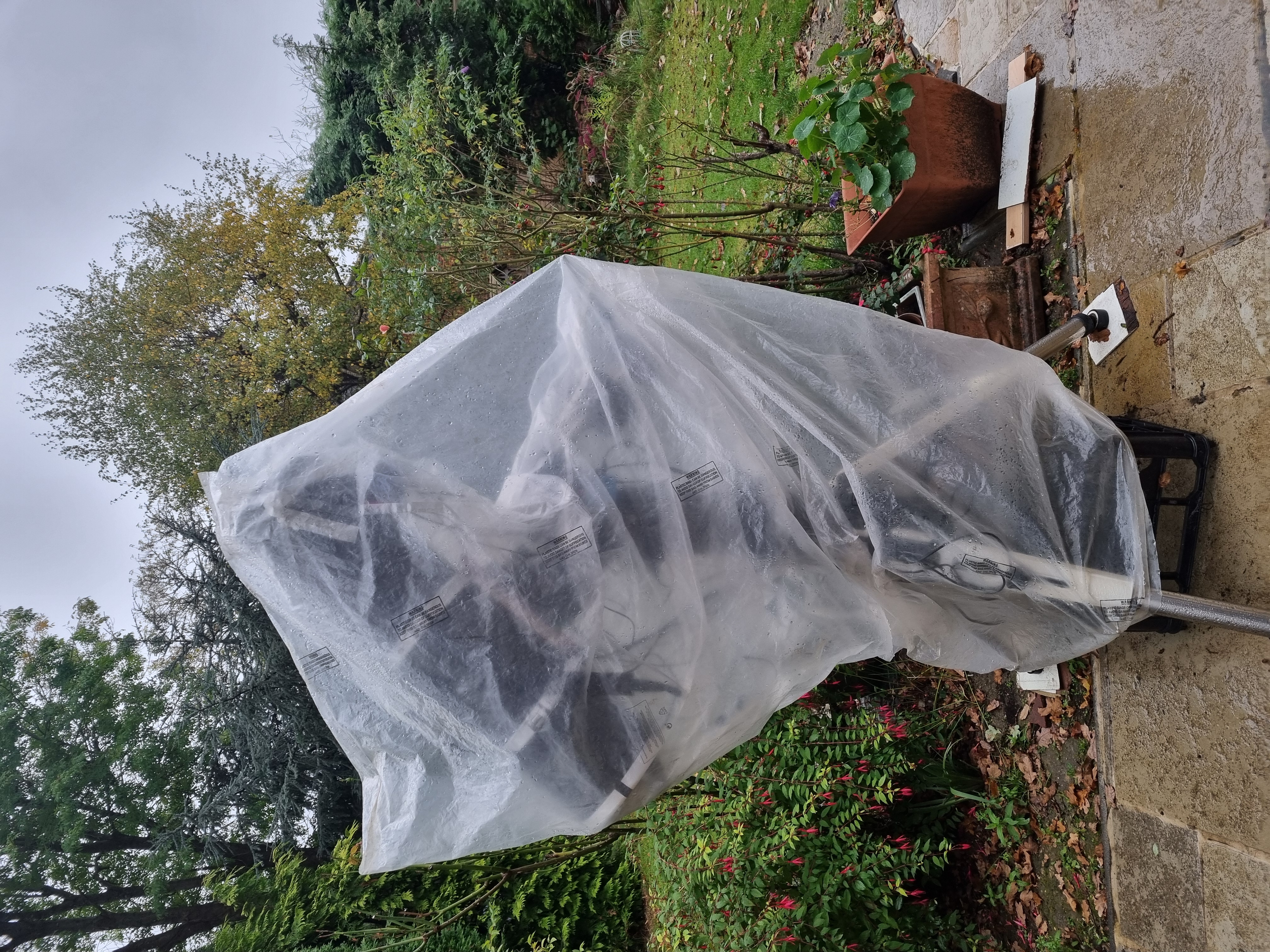
sadly -  are two large plastic sheets that came with some furniture.  But they are great to cover the scope on rainy nights so I can leave it set up and polar aligned awaiting the next clear night or part of a night.  It does mean that I can get imaging more quickly when the chance comes.

What do other folk without special observatories etc generally do?   Take everything down or cover the scope up for a few nights as I have done?
Engaging
Quinn Groessl avatar
It depends. I'll leave it out sometimes, otherwise take it inside. One of my set ups is small enough I just pick it up all together. Then my EQ6R I have to break in to 3 pieces (imaging train, mount, and tripod) to move. I spent a bit more for a cover though. I have a couple telegizmos covers. https://astronomics.com/search?q=telegizmos

If I'm going to be home all day and it's going to be nice weather I don't always cover them though. If I'm going to be leaving or I'm not sure about the weather the cover goes on.
Helpful
Tony Gondola avatar
Leave the mount outside 24/7 so I don't have to fiddle with polar alignment. I cover it with two black plastic bags topped by a white bag if it's hot. All secured with a velrco strap. The OTA I take out in the early evening and connect everything up. In the morning I take my sky flats, demount the OTA and cover the mount back up. It's 10 min. to set up and a little less to take down. My main scope is a Newtonian so I don't really want to subject it to large day/night temp. shifts to help preserve collimation.
Helpful Concise
Oscar H. avatar
the part I don't understand about all of this is why people think humid air (like fog) is not going to go inside from under the cover?

I have heard something about people using big desiccant bags or something like that under the scope, but it's not like that will magically stop the fog, right?
Engaging
Tim Hawkes avatar
the part I don't understand about all of this is why people think humid air (like fog) is not going to go inside from under the cover?

I have heard something about people using big desiccant bags or something like that under the scope, but it's not like that will magically stop the fog, right

It's a very good point. - you can't keep the humidity out.  The question really is how much does it matter  and over how many days ?  So when it's dry in the day the covers come off,  so some days at least there is respite.  But how long can you go for before there is damage of some sort?  How do you  balance the advantages of more imaging time versus the risks?  

For me - nothing untoward has happened after 4 or 5 days under covers --caveat emptor - thus far -- so if there is a promising forecast up to 3 or 4 days out (not very reliable I know) I'll stick -- if not it is  disassembled and comes back indoors.
Tim Hawkes avatar
Tony Gondola:
Leave the mount outside 24/7 so I don't have to fiddle with polar alignment. I cover it with two black plastic bags topped by a white bag if it's hot. All secured with a velrco strap. The OTA I take out in the early evening and connect everything up. In the morning I take my sky flats, demount the OTA and cover the mount back up. It's 10 min. to set up and a little less to take down. My main scope is a Newtonian so I don't really want to subject it to large day/night temp. shifts to help preserve collimation.

That seems a nice compromise -- but it depends what you think is most vulnerable to outdoor conditions -- humidity indeed as Messierman notes -- Is it the OTA or the electronics in things like cameras and mounts ?
Rostokko avatar
the part I don't understand about all of this is why people think humid air (like fog) is not going to go inside from under the cover?

I have heard something about people using big desiccant bags or something like that under the scope, but it's not like that will magically stop the fog, right?

The "big dessiccant bag" are not magic, but they work great at absorbing the humidity which gets up the cover. It is impressive the difference they make. You do need to "bake" them after a couple of days of humid weather though.
Tim Hawkes avatar
the part I don't understand about all of this is why people think humid air (like fog) is not going to go inside from under the cover?

I have heard something about people using big desiccant bags or something like that under the scope, but it's not like that will magically stop the fog, right?

The "big dessiccant bag" are not magic, but they work great at absorbing the humidity which gets up the cover. It is impressive the difference they make. You do need to "bake" them after a couple of days of humid weather though.

That seems a sensible precaution -- any size bag or provider you could recommend?
Well written Respectful
Rostokko avatar
Tim Hawkes:
the part I don't understand about all of this is why people think humid air (like fog) is not going to go inside from under the cover?

I have heard something about people using big desiccant bags or something like that under the scope, but it's not like that will magically stop the fog, right?

The "big dessiccant bag" are not magic, but they work great at absorbing the humidity which gets up the cover. It is impressive the difference they make. You do need to "bake" them after a couple of days of humid weather though.

That seems a sensible precaution -- any size bag or provider you could recommend?

I personally use three of these, one inside the rigid cap, and two strapped on to the OTA, toward the camera on the back. I like the form factor of those, but I assume any brand is about the same.
Tony Gondola avatar
Tim Hawkes:
Tony Gondola:
Leave the mount outside 24/7 so I don't have to fiddle with polar alignment. I cover it with two black plastic bags topped by a white bag if it's hot. All secured with a velrco strap. The OTA I take out in the early evening and connect everything up. In the morning I take my sky flats, demount the OTA and cover the mount back up. It's 10 min. to set up and a little less to take down. My main scope is a Newtonian so I don't really want to subject it to large day/night temp. shifts to help preserve collimation.

That seems a nice compromise -- but it depends what you think is most vulnerable to outdoor conditions -- humidity indeed as Messierman notes -- Is it the OTA or the electronics in things like cameras and mounts ?

From my own experience and what I've seen of others, mounts are fine outdoors as long as they stay dry. I mean, we don't think twice about leaving a mount in an un-heated observatory 24/7 and it doesn't seem to be an issue.  The OTA, camera and pc however do come indoors.
Well written Concise
AstroRBA avatar
Telegizmo. Excellent investment.
hughsie avatar
I have had my mount outside now for nearly 3 years protected by a Telegizmo cover. I hang a dehumidifier on the RA knobs and protect the sockets with rubber covers. It’s polar aligned so just needs the scope added to it. If I have a few nights of clear skies then the scope will remain on the mount under the cover.
Well written Helpful Concise
patrice_so avatar
I wrote a review of my expercience of storing my gears 24/7/365 outside under a cover. That was in March. It is now outside for 2 years and everything is fine. You may want to have a look there 
https://www.astrobin.com/forum/c/astrophotography/equipment/long-term-outdoor-cover-storage-thoughts-after-18-months/

CS

Patrice
hughsie avatar
patrice_so:
I wrote a review of my expercience of storing my gears 24/7/365 outside under a cover. That was in March. It is now outside for 2 years and everything is fine. You may want to have a look there 
https://www.astrobin.com/forum/c/astrophotography/equipment/long-term-outdoor-cover-storage-thoughts-after-18-months/

CS

Patrice

Great set up Patrice. I am interested in your 'Active Airduct'. Do you have any detailed pictures of this?

Many thanks,

John
Well written Respectful
Ruediger avatar
Good practice is also to put some desiccant into the tube instead of an eye piece. This helps to lower the humidity very effectively and prevents fungus to grow. Glas fungus needs more than 70% humidity. As long as you stay below you are on the safe side. I get the humidity below 20% in the refrator's tube and below 45% ind the CDK. Cheap and very effective.

Another topic is corrosion. Very important for any solution is:

1. no direct contact points between cover and scope. Here water collects.
2. working ventilation. Otherwise dew water will condense and collect under the cover.
3. When using air tight covers, you have to actively ventilate it or absorb moisture. Otherwise you will build a green house for mold and many other thing you do not want to have there for sure.

Maybe you will find also some ideas in my project description here: https://www.astrobin.com/1405hn/?nc=&nce=
Image G shows a way to insert desiccant into the tube by an eye piece desiccant container.

CS
Rüdiger
Helpful
patrice_so avatar
patrice_so:
I wrote a review of my expercience of storing my gears 24/7/365 outside under a cover. That was in March. It is now outside for 2 years and everything is fine. You may want to have a look there 
https://www.astrobin.com/forum/c/astrophotography/equipment/long-term-outdoor-cover-storage-thoughts-after-18-months/

CS

Patrice

Great set up Patrice. I am interested in your 'Active Airduct'. Do you have any detailed pictures of this?

Many thanks,

John

I dont have such picture at the moment. I will get some the next time I uncover the set up. 

However this is fairly simple. You need
- a PVC or aluminium vent
- a box to secure the horizontal part of the vent such that the vent does not get destroyed by the telescope cover
- a (intel-2012ish) CPU fan 
- some standard basic vent connecting parts, include a tube in which you can fit the CPU fan. 

In my case, I placed the solide tube with the fan next to the tripod and taped it. The vent has then a part going up from the fan to suck the air, a second part going down to the box and then a third part going trough the box and an exhaust on the side of the box that cannot be covered by the telescope cover.
Tim Hawkes avatar
Thanks indeed everyone. Some very good ideas here to learn from!
Well written Respectful
Derek Vasselin avatar
I'm curious… I've never tried this, but would there be any downsides to simply using a light-colored sheet or blanket?

This is assuming you know rain will not be in the forecast.

I live in a hot, humid climate during the summer months. Seems a light-colored cotton blanket would keep it covered, keep the intense heat of the sun off it, and is breathable (which would limit or prevent any condensation).

I'd be concerned an impermeable cover will trap moisture instead of letting it pass through?
Well written Engaging
patrice_so avatar
patrice_so:
I wrote a review of my expercience of storing my gears 24/7/365 outside under a cover. That was in March. It is now outside for 2 years and everything is fine. You may want to have a look there 
https://www.astrobin.com/forum/c/astrophotography/equipment/long-term-outdoor-cover-storage-thoughts-after-18-months/

CS

Patrice

Great set up Patrice. I am interested in your 'Active Airduct'. Do you have any detailed pictures of this?

Many thanks,

John

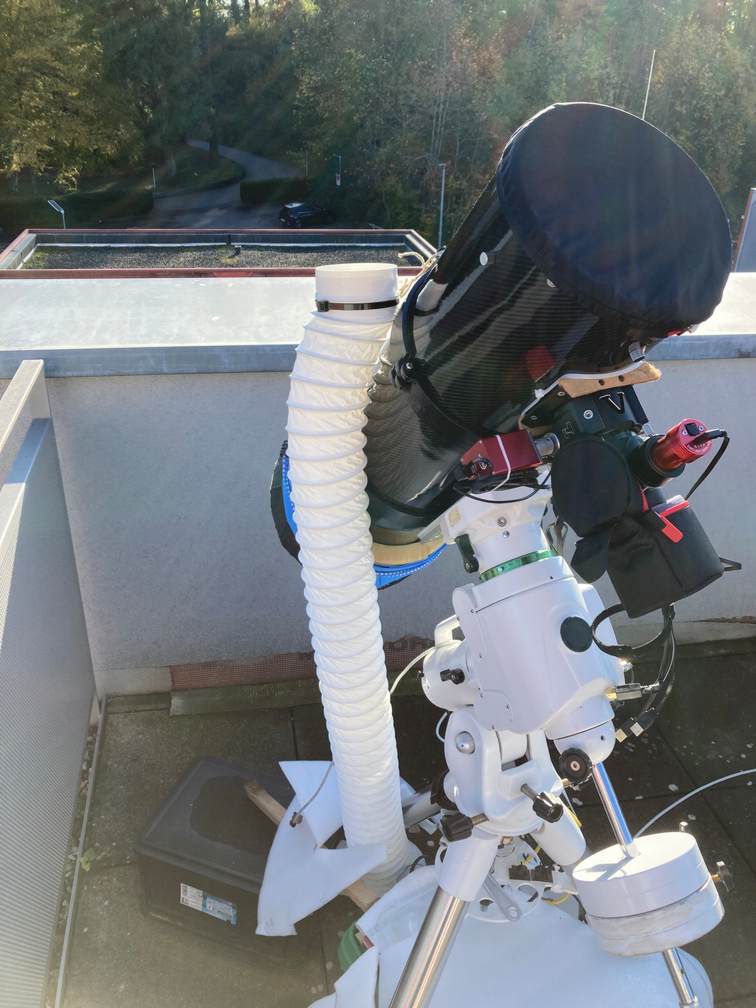
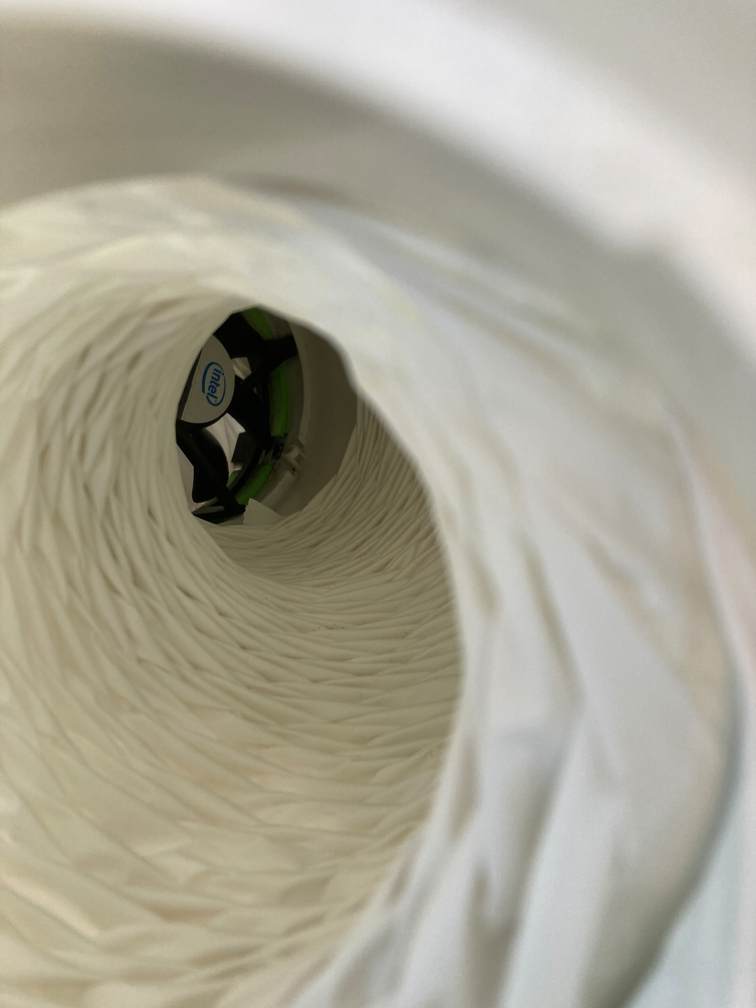
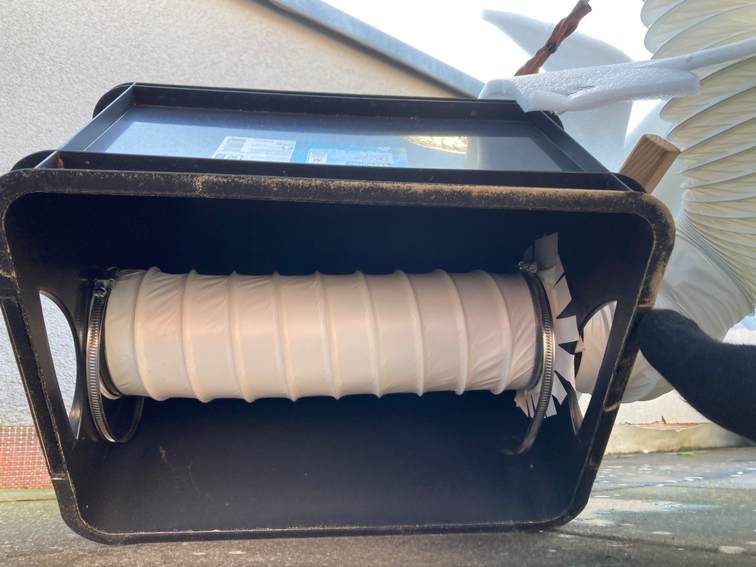
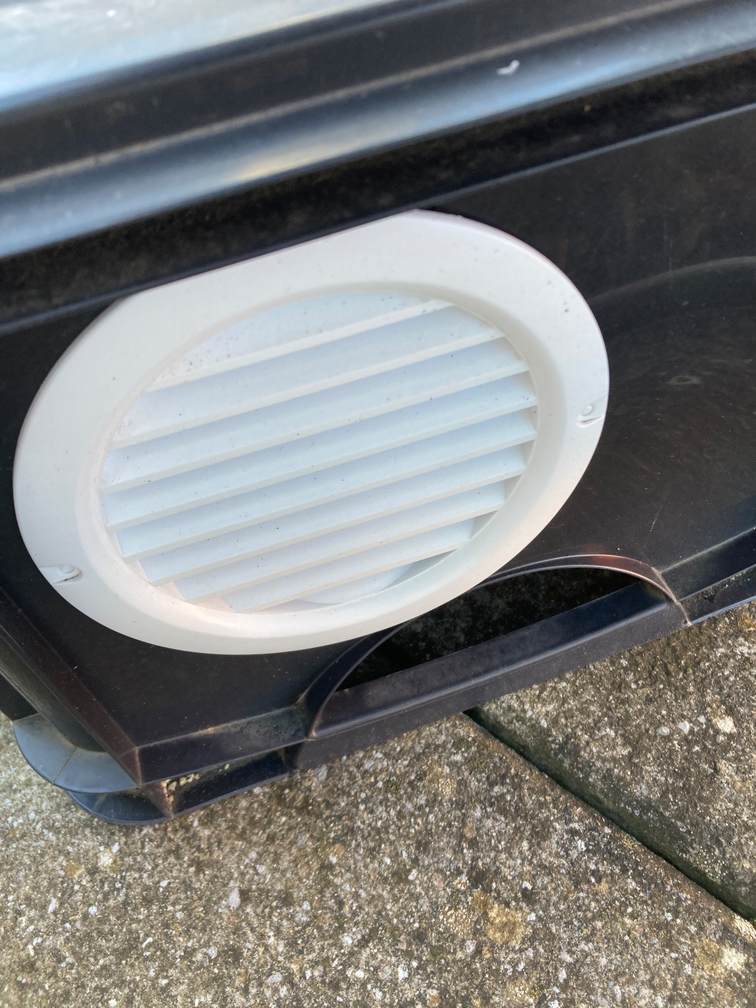
Hi @hughsie 

Here are a few more pictures :

Overview
 
Lookind down in the duct, seeing the CPU fan: 


Plastic box to avoid having the cover killing the duct within a few days, seeing from below: 
Exhaust: 


Cheers

Patrice
Related discussions
Telescope/Mount/Tripod Cover
Hi! I am thinking of getting a cover so I don't have to carry everything into the house after imaging and so I won't have to polar align every night. I am thinking of this particular cover (see link below), which would cover the entire imagin...
Covers equipment to leave scope set up; discusses protective covering solutions.
Feb 20, 2023