Hi,
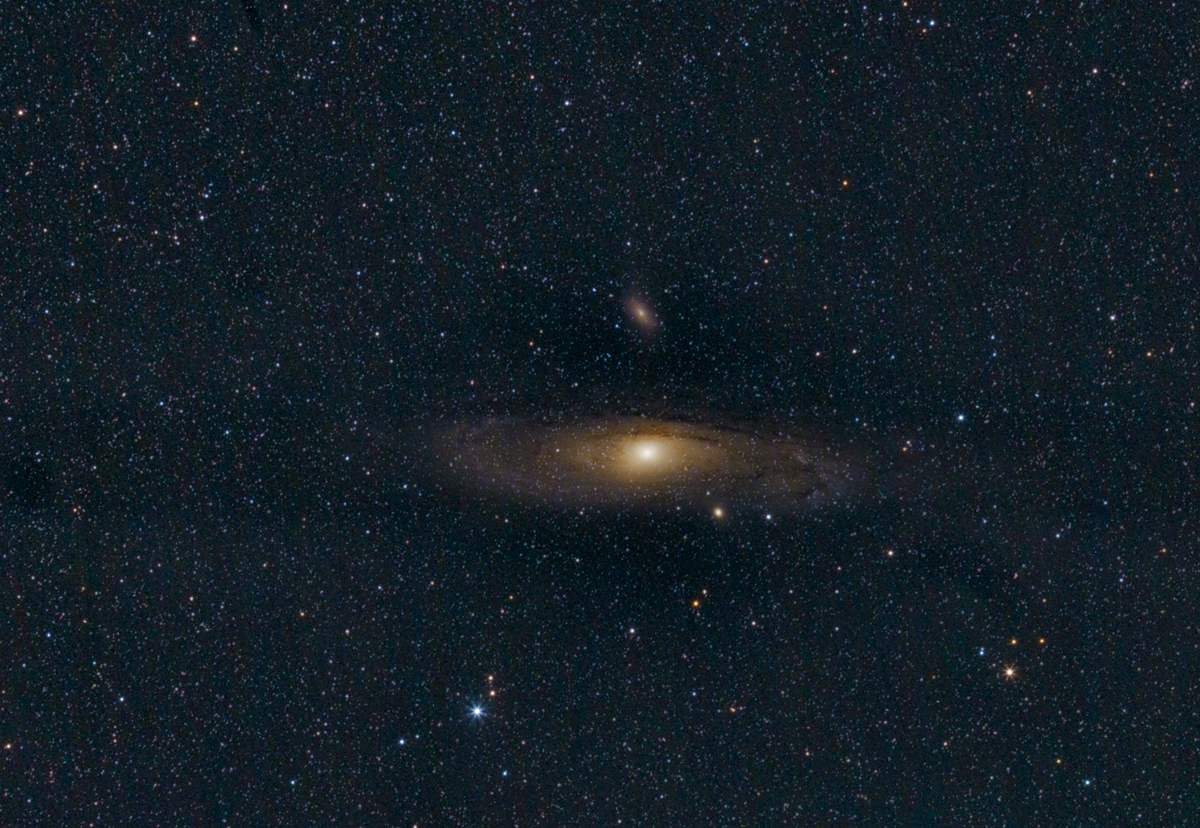
The first photo is not 49 shots of 10 seconds but 49 shots of 120 seconds. I assure you that 120 seconds will give you very good results with any decent lens, but anything above 40 seconds it is not easy to achieve at 200mm. Also he is using a Canon EF 70-200mm which is more expensive than the Samyang (and three times more expensive than the Nikor 200).
The second picture has 1 minute shots and the photographer is using an EQ5 mount that costs more than 1000 dollars used, and the D7000 which is a prosumer level camera (better sensor than the D3200 and more expensive).
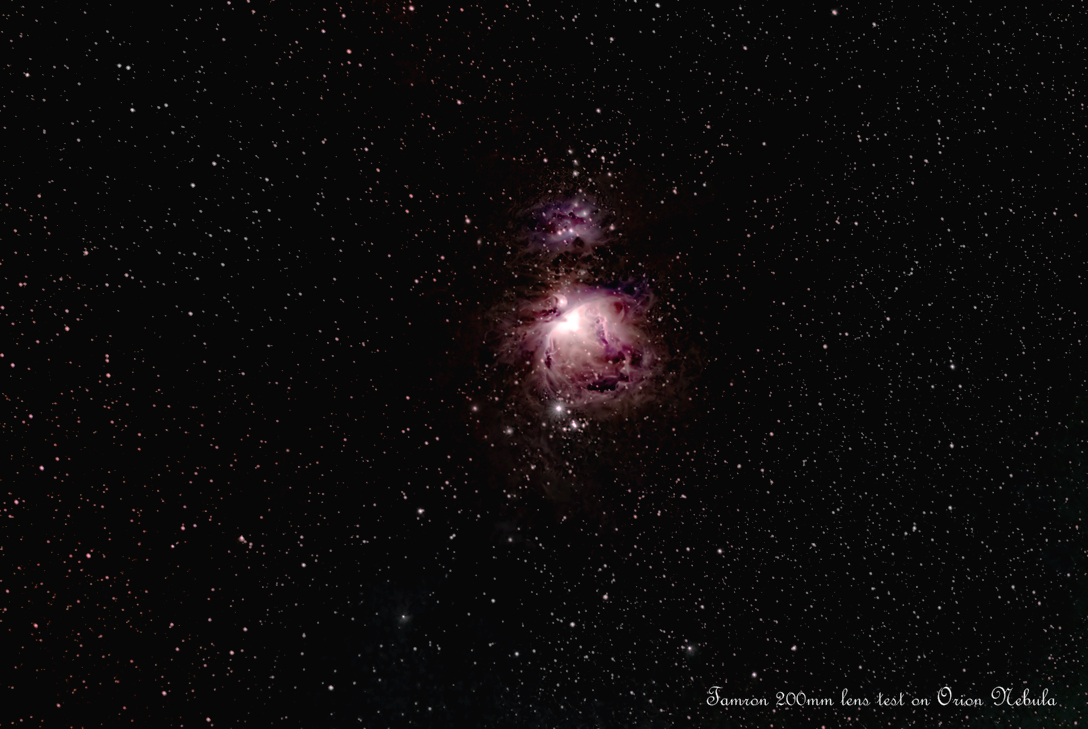
The third picture is using a Tamron 80-200mm lens set at f/4 (this is two time the light gathering of the Nikor 200 at 5.6) and an astro-modified Canon that is clearly more sensitive to Ha than a D3200, hence all that red.
So as you can see the 200mm focal lens is not the decisive factor behind those photos and all of them actually needed equipment that costs more than the Samyang.
The reason for this is tht deep sky objects are very faint. All other conditions being equal (light pollution, sky clarity and so on) you need a _good_ tracking mount (more expensive for larger lenses), you need a good sensor, you need a good lens. The sum will be about the same, for example you can get a super lens that costs 1000 dollars and will collect the light that you need in 10 seconds or you can get an average lens that collects 10 times less light so now you need 100 seconds which means more dollars spent on the mount

In my opinion if you have to spend on something, the most important is the mount and the second most important is the lens. The mount gives you accurate tracking, even 30 seconds is a huge difference compared to 1 or 2 which is what you can do without a tracking mount at 200mm on a DX. The lens on the other hand, allows you to collect more light in less time. This is not just about the faintness of the target. If you have to take a 1 minute exposure it is more likely that some wind will blow and shake the camera, it is more likely that periodic errors on the mount will manifest, that an airoplane will pass, that atomspheric turbulence will cause the stars to twinkle and so on.
Now, you are obviously a beginner (I do not mean to offend, I am a beginner too just a couple of years ahead
).
So my revised recommendation is don't worry too much about it. You *cannot* get photos like the one you sent me but the main reason is lack of practice and knowledge, not the equipment. You need to learn and you should not pay a fortune to learn.
So get the Nikkor 200mm, it is relatively good value for money (also excellent for daylight photography as I mentioned) and you will get decent photos especially on easy targets such as M42 or the Lagoon. Not as impressive as the ones you pasted here, but decent nevertheless. You will also get much better ultra wide field photos if you use it at 55-80 mm wide open, do not underestimate this category. If you can get to a dark location the photos can actually be quite good, I would say a dark location is 80% of the result and anything else combined is 20%. Learn to polar align, learn to post process, learn to find targets, learn about the moon, learn when the weather is good for photos and when it is not, learn from your mistakes. These are the important things. And after a few years if you see that this hobby is for you and you have the experience to know that your are
truly limited by your lens or by the D3200, you can purchase or event rent something better. But it will be a different decision by then, an informed one.
Cheers,
D.