Latest WBPP Results with ASI2600 MCP (Celestron 9.25" Edge HD) seem to Indicate a Problem - What am I doing wrong?

10 replies343 views
Gina Knight avatar
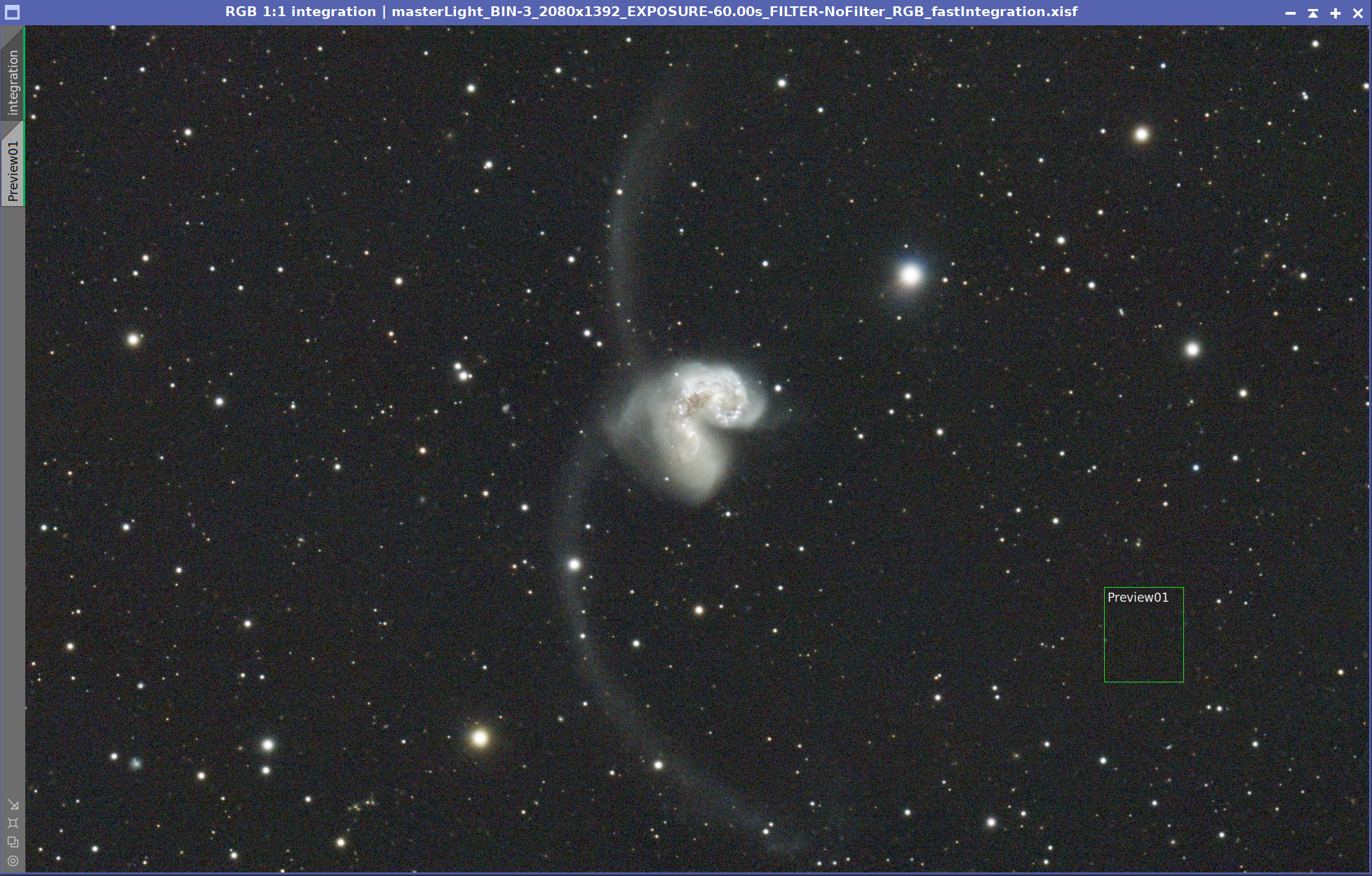
Hello- I am imaging at F10 with Celestron 9.25" Edge HD, ASI2600 MCP and EQ6 R Pro mount with Celestron OAG from Bortle 4-5  skies.  I use ASIAir Plus, a camera gain of 100 and BIN 3 normally with this set up. Previously I had no issues with the above, but lately after running WBPP (lights, darks, flats and flat darks) the resulting stacked images look horrible - like extremely noisy and overexposed. In this case below I only shot 60 sec subs at 0 degrees C and -10 C in 2 separate groups. No filters were used.  I am wondering what I am now doing wrong? The individual light frames look fine. Have any of you experienced similar results? Could it be an issue with my ASI2600 MCP going bad or some setting inadvertently getting changed with the calibration frames, or something not set up properly in WBPP? Here is what I see after spectrophotometric color calibration before any other processing. Here is also a link to the masters in case any of you kind souls has time to take a look. I should note that the same issue is present when I complete WPBB on each group separately.

https://drive.google.com/drive/folders/1bureqWYgYBgs4ZxbLgGTRf9yTXD2pc1Y?usp=drive_link


Thank you!
Gina
Engaging
andrea tasselli avatar
The first port of call in this or similar issues is NOT to use WBPP and do it manually, step by step. Since you didn't include raw frames I couldn't check whether is anything wrong with them but as far as the calibration frames are concern I can't find any obvious fault, other than looking weird because of the bin 3x. Post a stack of raws I can have a go at them. As for the final product the way it looks points to something is wrong with the normalization step but what exactly it is I can't say.
NeilM avatar
Gina,  I may be totally off base on this….  but I also imaged NGC 4038/4039 last week and from my location on Northern California it was very low on the horizon.  Because of the low angle I had bad chromatic aberration (I have a refractor) and also a high FWHM measurement on my stars with big halos. I ended up taking 3-4 hours of images over 6 nights and letting PI weight them with WBPP.  Even so it was a challenging target to process.  Might it be that you are also experiencing  ‘smearing’ due to the low angle (I think you’re in Arizona?)
Helpful Insightful Respectful Engaging Supportive
Jonny Bravo avatar
I assume that's just an auto stretch of your data. Why are you basing your argument on a screen transfer? Looking at the masters unstretched, I don't see any large amount of clipping - there are only a couple of stars that show through.

Do you have an example of a previous integration that shows a marked difference in outcomes?

How much total integration are these masters? You mention they are 60" subs, but not the total number of them in the integrated stack.

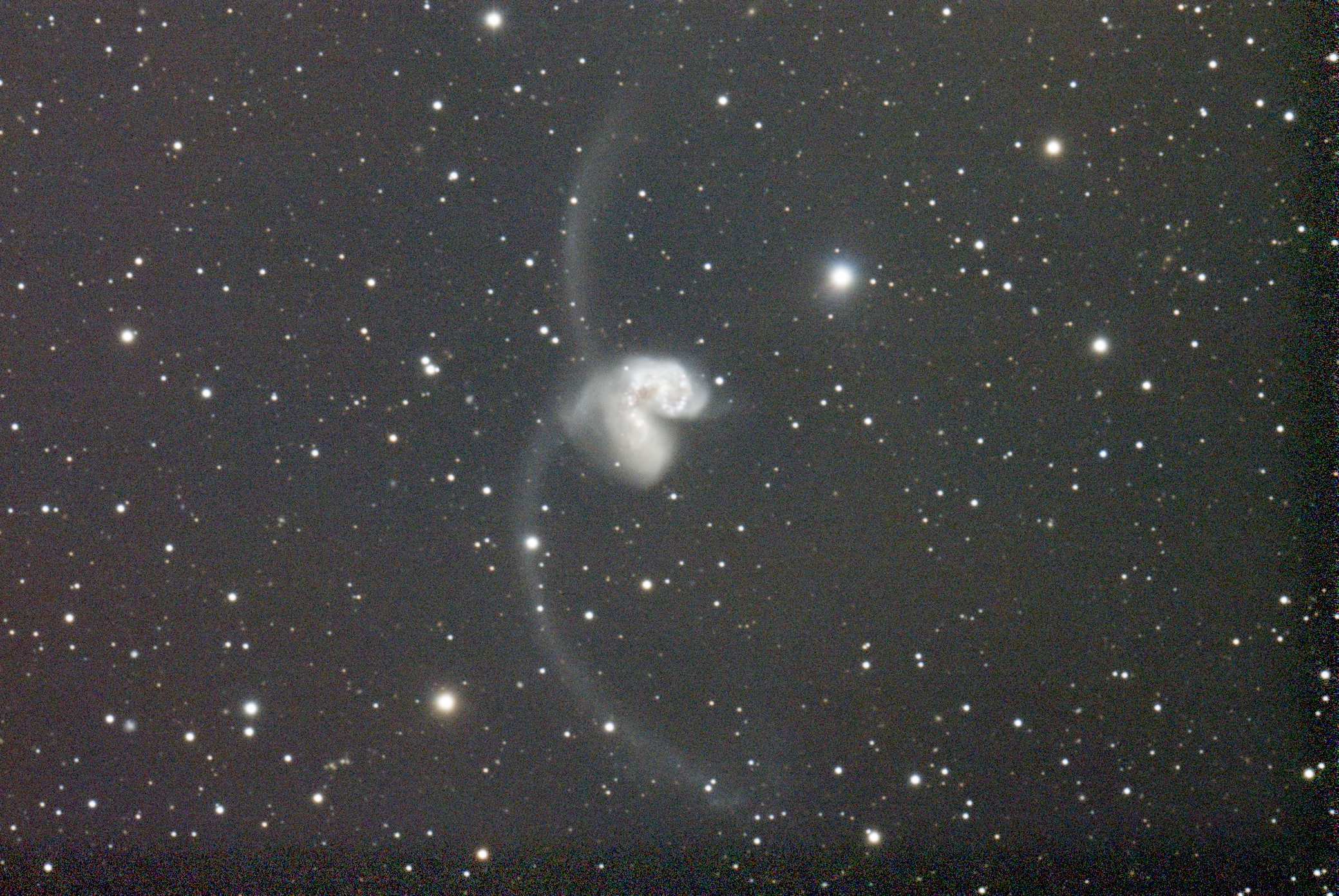
Here's a cropped, background extracted, spectrophotometric color calibrated version of your image with a screen transfer function applied (background changed to 0.15 instead of the default):


I'm not seeing a whole lot wrong. Sure, it's got a bit of noise, and I had to crop out the stacking/framing issues, but otherwise, I'm not seeing an issue.
Helpful Insightful
andrea tasselli avatar
Got it! The OP didn't use the 24bit LUT. When that is on everything is back to normal.
Gina Knight avatar
andrea tasselli:
Got it! The OP didn't use the 24bit LUT. When that is on everything is back to normal.

Thank you so very much. I think this is most of the issue. I must have inadvertently turned that 24 bit button off in PI.
Well Written Respectful
Gina Knight avatar
Jonny Bravo:
I assume that's just an auto stretch of your data. Why are you basing your argument on a screen transfer? Looking at the masters unstretched, I don't see any large amount of clipping - there are only a couple of stars that show through.

Do you have an example of a previous integration that shows a marked difference in outcomes?

How much total integration are these masters? You mention they are 60" subs, but not the total number of them in the integrated stack.

Here's a cropped, background extracted, spectrophotometric color calibrated version of your image with a screen transfer function applied (background changed to 0.15 instead of the default):


I'm not seeing a whole lot wrong. Sure, it's got a bit of noise, and I had to crop out the stacking/framing issues, but otherwise, I'm not seeing an issue.

Hello - thank you so much for taking a look. The total light frames were 270 @ 60 sec so 4.5 hours only integration time. I suspect that most of the issue was how things were being displayed in Screen Transfer Function without that 24 bit button mentioned below being enabled.
Gina Knight avatar
Gina,  I may be totally off base on this….  but I also imaged NGC 4038/4039 last week and from my location on Northern California it was very low on the horizon.  Because of the low angle I had bad chromatic aberration (I have a refractor) and also a high FWHM measurement on my stars with big halos. I ended up taking 3-4 hours of images over 6 nights and letting PI weight them with WBPP.  Even so it was a challenging target to process.  Might it be that you are also experiencing  ‘smearing’ due to the low angle (I think you’re in Arizona?)

Hi Neil - yes you are right - this object is quite low on the horizon - but it is to the south which is the darkest area of my night sky (Bortle 4). I could only get about 1 hour per night and a lot of satellite trails - so that is definitely another reason for this particular outcome. However other master lights for various galaxies have been looking similar the past 1-2 months so I think the main factor is the 24 bit button not being enabled for Screen Transfer Function in PI as mentioned in Andrea's comment below!
Helpful Insightful Respectful
Gina Knight avatar
It sounds like there may be an issue with either your backfocus spacing or camera tilt. The ASI2600 with a Celestron 9.25" Edge HD can be sensitive to precise alignment. Double-check your spacing (should be around 146.05mm total from the reducer) and inspect for any sensor tilt or collimation drift.

Thank you. Will do!
andrea tasselli avatar
Don't need to, the field is well corrected. I checked it.
Related discussions
What’s Wrong With My Luminance?
I really didn’t want to post another knucklehead question, but I am not sure how to proceed. The title says it all. I am a new mono shooter (Minicam8) and this is my first project that I included a luminance image, M33. I image in Bortle 7 skies. I h...
Noisy overexposed results similar to luminance issues with mono camera.
Jan 7, 2026
WBPP Stacking generates Black and White result from OSC Light frames
Have faced a peculiar issue during WBPP Stacking in Pixinsight for two sets of of light frames . Others seem to work fine I have a OSC ASI 533 MC Pro along with Askar SQA 55 and my recent exposures of M42 and NGC 1499 have generated a black and white...
WBPP stacking problems with calibration frames causing image quality issues.
13 days ago
Need help with Flat calibration
Hi guys, I’m in a big problem for two months and couldn’t find a solution. In my remote setup of Skywatcher-250 Quattro, I’m consisting getting dust donuts in low height areas, maybe light polluted sky area. I know that easiest way is clean the filte...
Flat calibration issues can cause noise and exposure problems in stacks.
Feb 17, 2026
Flats adding to images instead of subtracting in PixInsight WBPP
Astro Friends, I have been imaging for about 5 years and have been successful using refractors and mono imaging. I have branched out this year and now have an SCT and mono setup. I am seeking help with my flats which seem to add themselves to my imag...
Flats processing errors in PixInsight WBPP directly relevant to your problem.
Jan 2, 2026