
Hi everyone !
Back in summer 2021, I captured a 2-panel mosaic of Sh2-119, and in summer 2023, a 4-panel mosaic of NGC 7000.
Both were done using the same setup and camera (TSA102 + Atik 16200).
While stitching the Sh2-119 tiles this weekend (yes, 4 years after acquisition — no rush here... 😂), I realized that both mosaics actually have enough overlap to be combined into a single, larger mosaic.
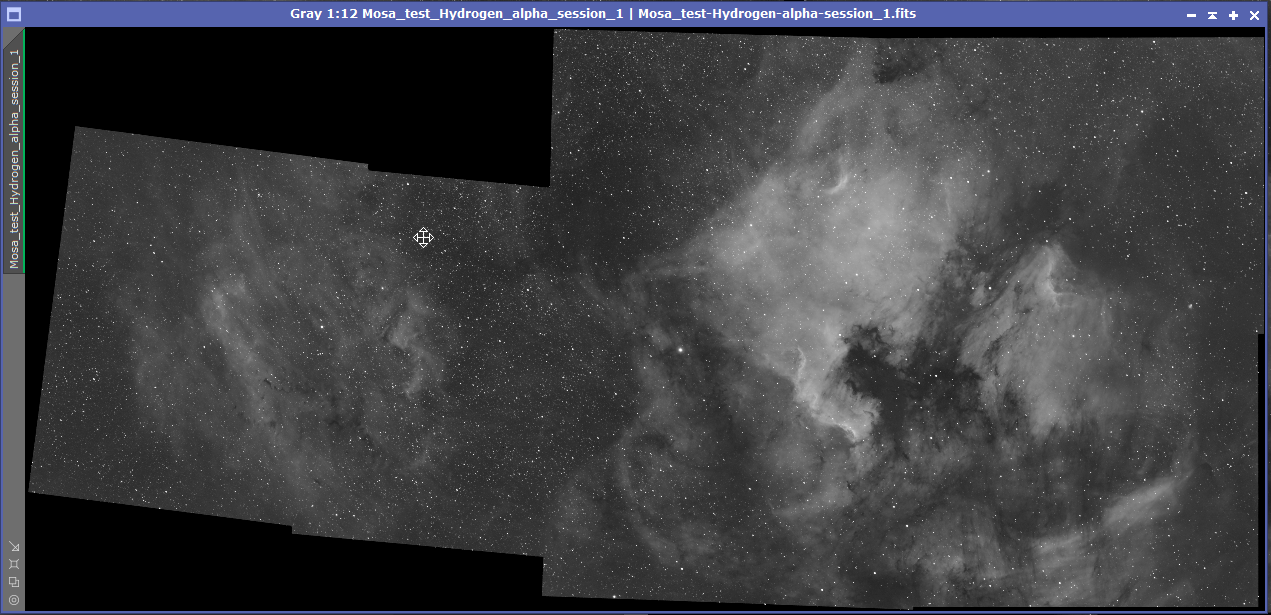
Unfortunately, since this wasn’t planned in advance, and as you can see in the image, I have a slight framing issue between the two sets — meaning I’d need to crop way too much for the larger mosaic to be of any real interest...
Since I’ve sold the camera in the meantime, waiting for this summer to fill in the gaps isn’t really an option.
So — if any of you happen to have raw data covering all or part of the missing regions and would be willing to share it, I’d be truly grateful! 🙂
It doesn’t have to cover every missing part — just enough to avoid excessive cropping in the final mosaic (especially sparing NGC 7000...).
Ideally, I’d need all three SHO channels; and if the data was taken with a refractor (for star profiles), that would be even better.
My sampling is 2"/px, so anything reasonably close would work fine.
Thanks a lot in advance, and feel free to contact me here or via PM! 🙂
Clear skies to all,
JB (aka “the framing king” 🙂)
Back in summer 2021, I captured a 2-panel mosaic of Sh2-119, and in summer 2023, a 4-panel mosaic of NGC 7000.
Both were done using the same setup and camera (TSA102 + Atik 16200).
While stitching the Sh2-119 tiles this weekend (yes, 4 years after acquisition — no rush here... 😂), I realized that both mosaics actually have enough overlap to be combined into a single, larger mosaic.
Unfortunately, since this wasn’t planned in advance, and as you can see in the image, I have a slight framing issue between the two sets — meaning I’d need to crop way too much for the larger mosaic to be of any real interest...
Since I’ve sold the camera in the meantime, waiting for this summer to fill in the gaps isn’t really an option.
So — if any of you happen to have raw data covering all or part of the missing regions and would be willing to share it, I’d be truly grateful! 🙂
It doesn’t have to cover every missing part — just enough to avoid excessive cropping in the final mosaic (especially sparing NGC 7000...).
Ideally, I’d need all three SHO channels; and if the data was taken with a refractor (for star profiles), that would be even better.
My sampling is 2"/px, so anything reasonably close would work fine.
Thanks a lot in advance, and feel free to contact me here or via PM! 🙂
Clear skies to all,
JB (aka “the framing king” 🙂)

