Strange Flats for the first time with Lacerta flat box any idea?

12 replies346 views
Frédéric Ruciak avatar
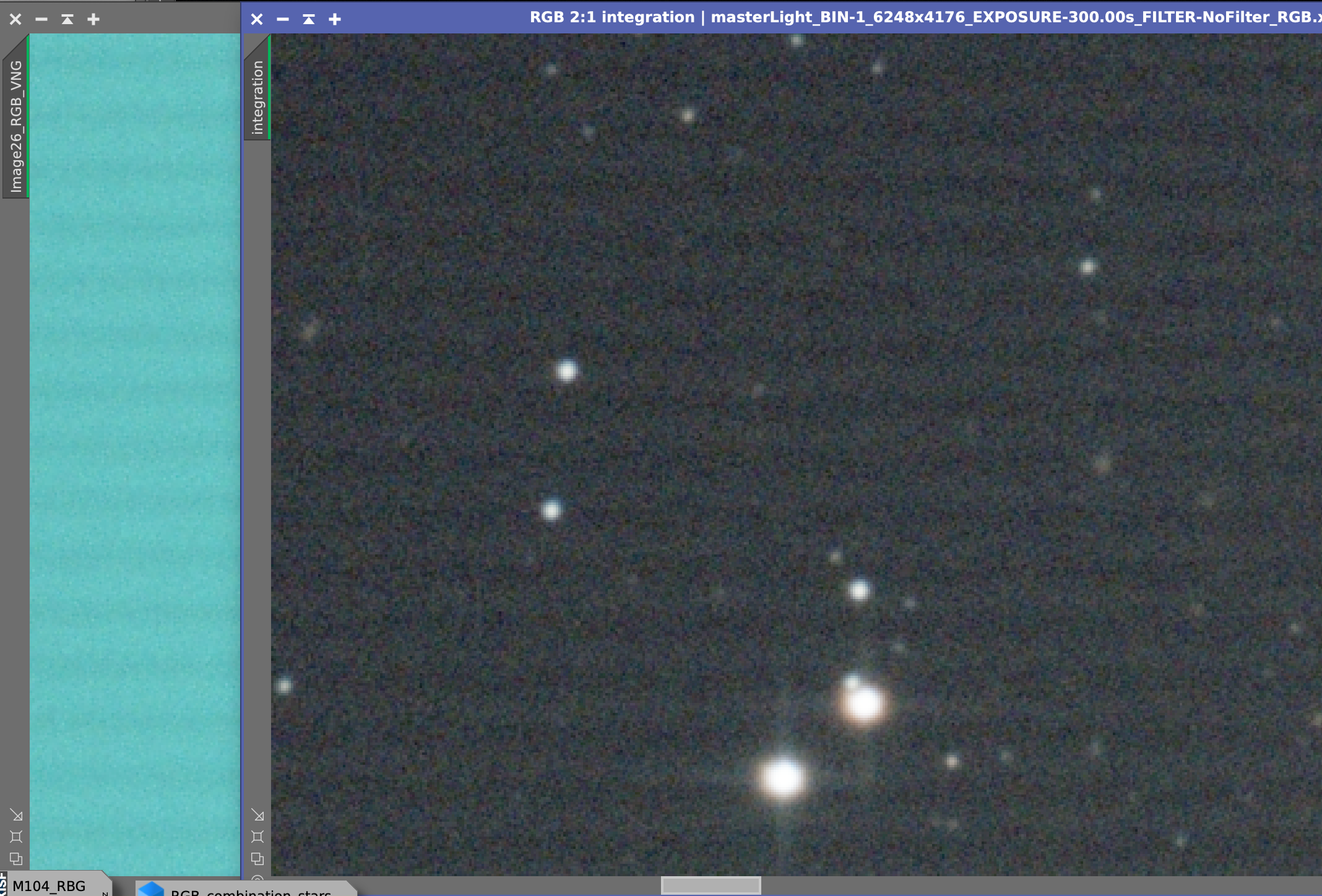
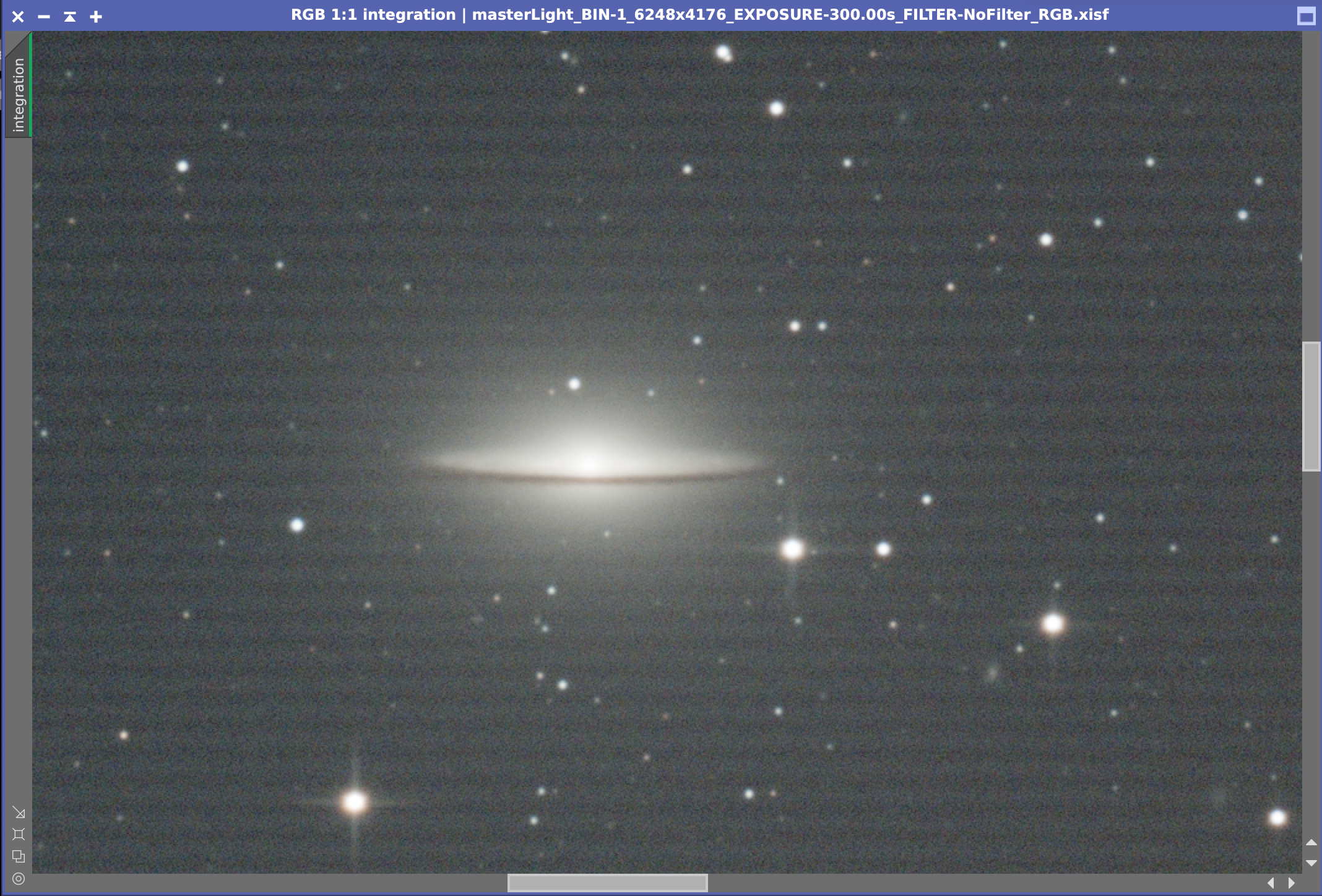
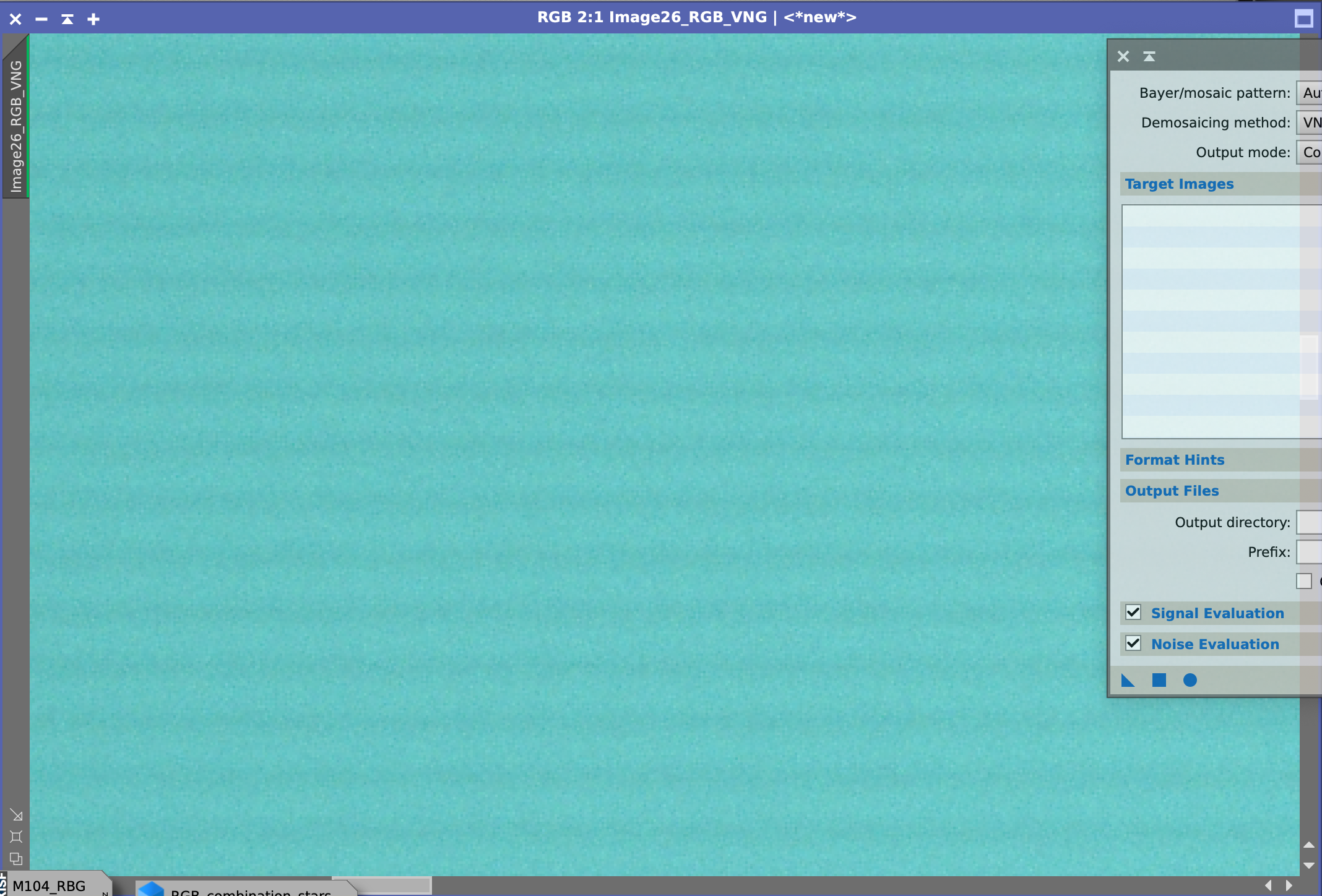
Hi all, I would like to share a very strange experience: I processed (pixinsight) two sessions of capture (newton 150F4) on M104 with flats (Lacerta flatbox withFlat wizard from NINA) per session and got a very strange linear ondulated background as seen in the attachment. To make it short I found that this background was coming from the flats as can be seen in one individual flat (debayered).  Surprinsingly it is not showing the same way on the masterflat that looks normal but most probably keeps tracks on this at a decimal level. The side by side crop show clearly the same "frequency" in the master light as in the flat. I found too that if I do flats on the blue sky (not with my lacerta flatbox) I do not have this linear ondulation on the background. What is strange is that I used this lacerta flatbox a lot of times before without noticing this problem in any masterlight. When I zoomed on the masterlight this time it was obvious that something got wrong. It looks as an interference pattern maybe generated by the combination of the flatbox, the L-pro filter in front of the baader MPCC and the baader matrix on the camera. As you can see, the pattern is aligned with the largest dimension of the sensor and doesn't rotate if I rotate the flatbox.
Has anybody ever had the same experience? any idea? To solve my problem I switched on doing flats on the blue sky just after sunset but I most probably have some light leak problem now. 

CS Frédéric
Helpful Engaging
Kristof Vandebeek avatar
I had the same issue with a flatbox that I used - it was caused by the flickering of the LEDs due to PWM used to "dim" the flatbox. The flatbox was very bright and lowering the brightness introduced the issue. A solution would be to place something extra between the flatbox and your telescope so that you can use longer exposures to overcome the flickering.

I eventually ended up using sky flats with my mono camera and these have been working just fine so far.
Well Written Helpful Insightful Concise
andrea tasselli avatar
Sky flats are the best.
Tom Fleming avatar
What is your exposure time for your flats? If it’s too short, then you might see patterns from LED flicker, as noted by Kristof above. I usually try for 1 sec. exposure on my flats because of this issue. You just have to make sure you adjust the brightness of your light source accordingly.
Well Written Helpful Concise
Pedro Goles avatar
Hi Frederic
I discovered my LEDS on a homemade flat panel was very prone to interference from several origins. Even when I was earing my old radio at the observatory the panel could make "radial" interference. That ended when I switched back to 12V car incandescent bulbs (oldies), keeping only 1/3 of these LEDS, and from that point I was able to do my flats without problems.

Good luck with this,
Pedro Goles
Helpful Concise
Frédéric Ruciak avatar
Thank you for your advices, yes I have extremely short flat exposure. I'll try to extend.
Frédéric Ruciak avatar
I'll try to build a Faraday cage around the flat box with aluminium paper as I understand that it might interfere electrically and not optically with the sensor of the camera.
Tony Gondola avatar
andrea tasselli:
Sky flats are the best.

+1
Frédéric Ruciak avatar
Hi Andrea, yes you are right. For the time being I am using it with good results but the fact is that sometimes when I setup later at night I like to record my flats a little bit to late to still have a uniform blue sky and sometimes it is not uniformaly blue. I would like to have a backup with that flat box working well up to now.
Sven Hoffmann avatar
I had exactly the same problem with a cheap PWM dimmer I used for dew bands before and others have already pointed out the problem. You can buy a flickerless dimmer from Lacerta: https://teleskop-austria.at/PowerSplitLUX#m - unfortunately they only sell the big version now. I have a previous old version with only 2 channels which was much cheaper. I can confirm this really works as advertised. Maybe there are other products out there as well.
Well Written Helpful Concise Supportive
Bogdan Vuk avatar
Set the exposure time to 3  to 5 seconds.
Vahur Sinijärv avatar
Frédéric Ruciak avatar
Hi Vahur, thank you for the reference, I ordered it.
Well Written Respectful
Related discussions
Issue in frames calibration?
Hi everyone, this is a long post, but it’s needed to provide proper context. Thanks in advance to anyone willing to read through it and help me figure things out! I’ve been struggling for days with what seems to be a calibration issue (or possibly a ...
Both posts describe troubleshooting efforts to identify and resolve unexpected artifacts or problems that appeared in processed astronomical images.
Jul 8, 2025
PixInsight New Tool - Multiscale Gradient Correction Test
Yesterday a new version of PixInsight 1.9.0 was released. The release contains some nice features, but by far the most important one is the MultiscaleGradientCorrection tool (I): https://www.youtube.com/watch?v=BHE3J069NCo It is supposed to do backgr...
Both posts discuss challenges with correcting background gradients and artifacts in astrophotography image processing using PixInsight.
Dec 21, 2024
Help With Strange Gradient
Hi all, I'm just making this post because I'm at a bit of a loss on how to process some data I've recently acquired. My university was kind enough to let me use one of their telescopes to take some images on. I decided to shoot M 83 becau...
Both posts describe technical challenges encountered while capturing astronomical images of deep-sky objects.
Jul 9, 2024
The ultimate weapon to deband CMOS sensors
In this post I present an easy to implement and extremely effective method to remove vertical (or horizontal) patterns, inherent to many modern CMOS sensors. The processing is done using PixInsight, and makes use of masking in the Fourier domain. Fir...
Both posts address methods for identifying and correcting linear pattern artifacts that appear in processed astronomical images.
Sep 21, 2024