I'm not a moon guy, but I've just taken 3 different photos from 3 different cameras on 3 different refractors. Each photo is 40-60% stacked in AS!3.x from a single 100 frame SER file - hard to pick a winner, and I don't really know what I'm doing. Used AS!3.1 for processing. SER player for preprocessing the colour captures as AS could not open the 16bit colour SER. The skies are noisy at the moment so I played around with different cameras doing different things. I am thinking the green bleed I see from colour cameras might be due to pixel resizing the goes on, and the final layering within the software. But that is only a guess as ASI cameras are strongest in green and it could be something to do with the debayering of the RGGB. I am guessing the green is significant somehow.
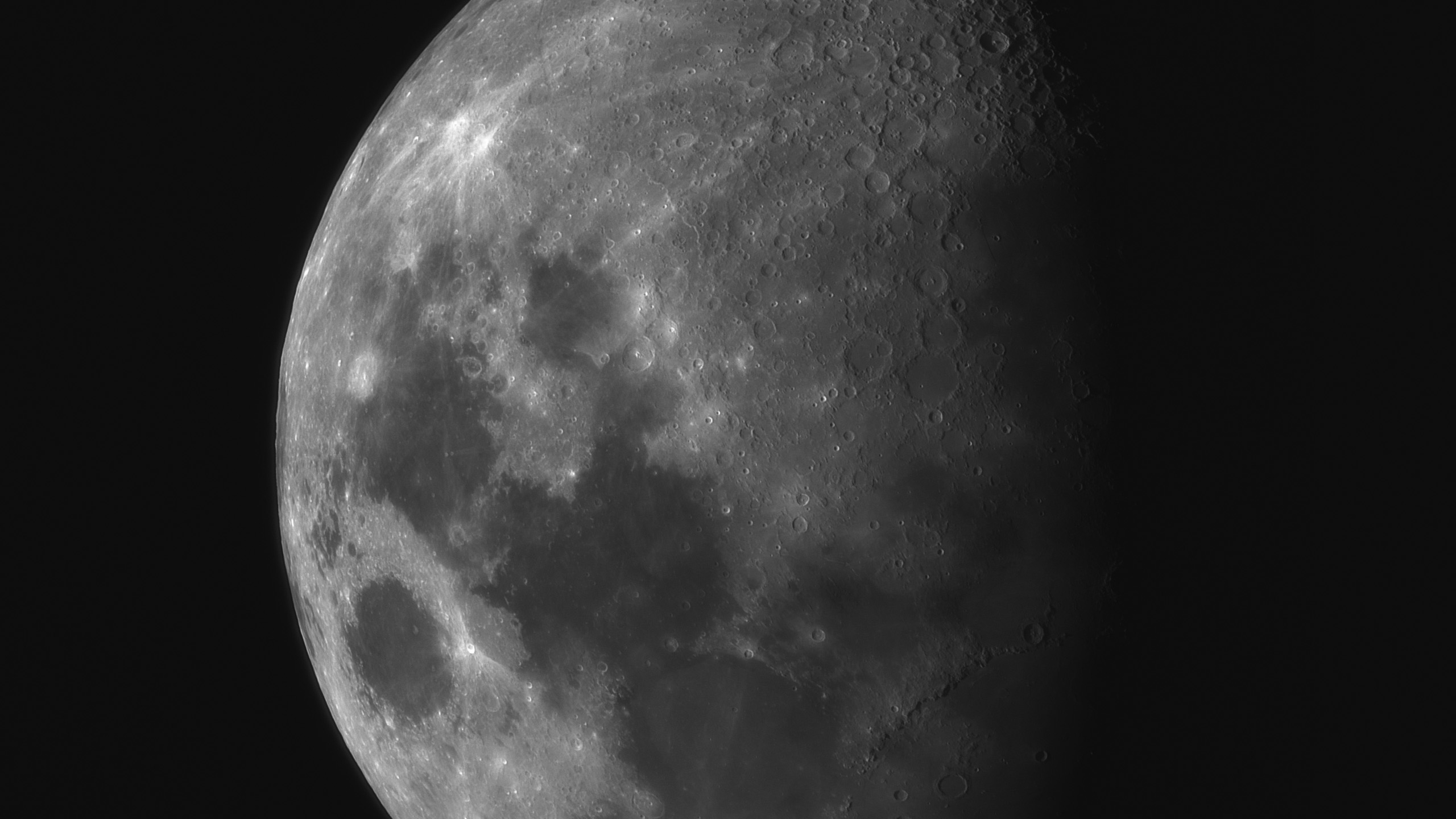
1. My guide camera is a Skywatcher 50 ED with a ASI290MM. Taken last night 12Feb2022.
Captured in 16bit mono, 100 frames; 1ms at 150 gain; AS!3.1, AP 60% frames, drizzle 1.5, greyscale color; sharpen; jpg from TIF (<1MB)
Straight through, zero editing, cropped and sized to under 1MB
(note: only single SER file lights were used in this testing, no other darks, flats or calibrations were used)
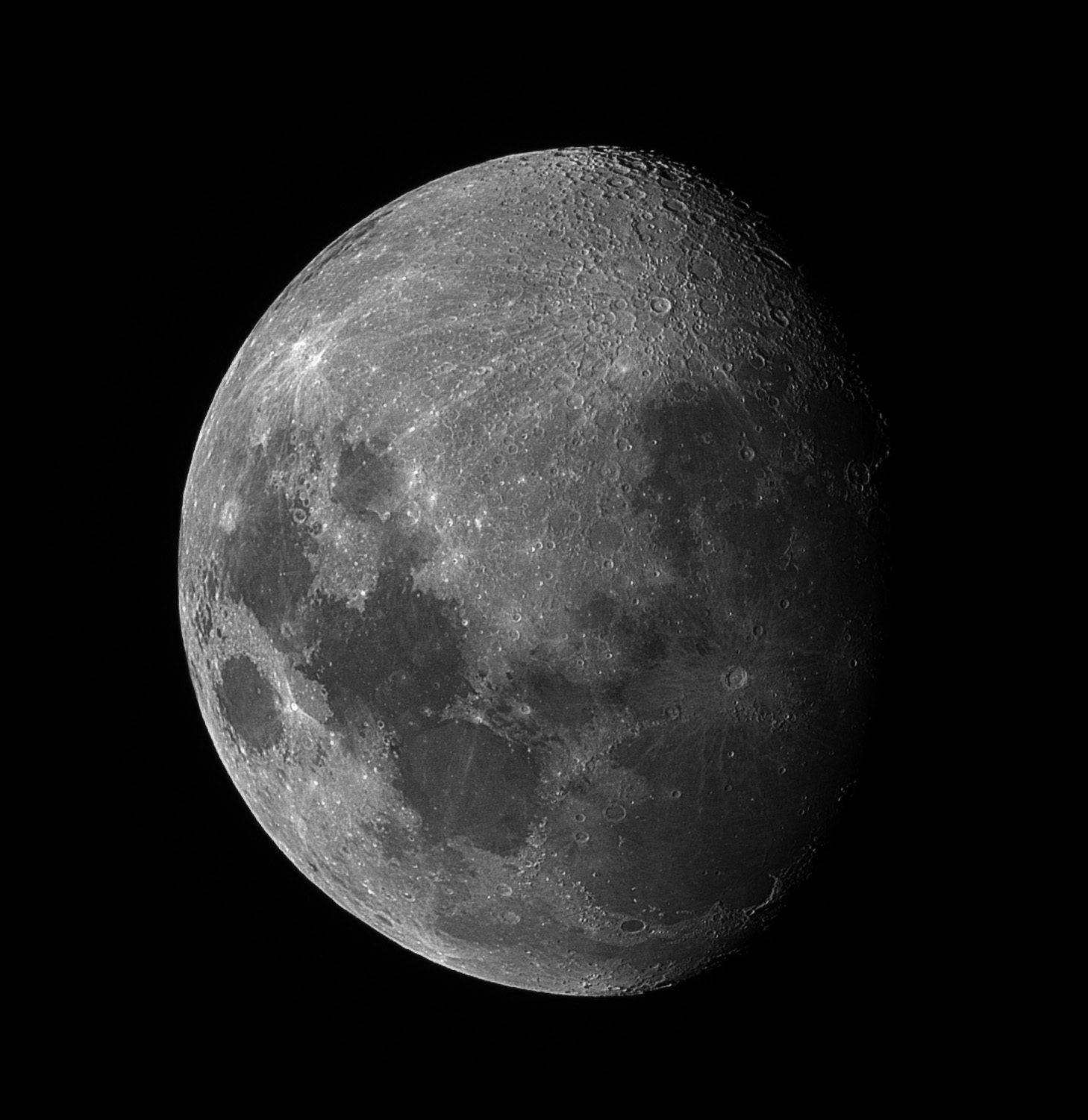
2. RedCAT 71 with AS178MC - I have a thread on this, could not get the green color bleed out of the final; processed in RGGB in AS!3.1 from 10Feb2022
Captured in 16bit colour, 100 frames; 1ms at 150 gain; AS!3.1, AP 40% frames, drizzle 1.5, align RGB; sharpen; jpg from TIF (<1MB) tried many different things but could not remove the green bleed completely
2a)
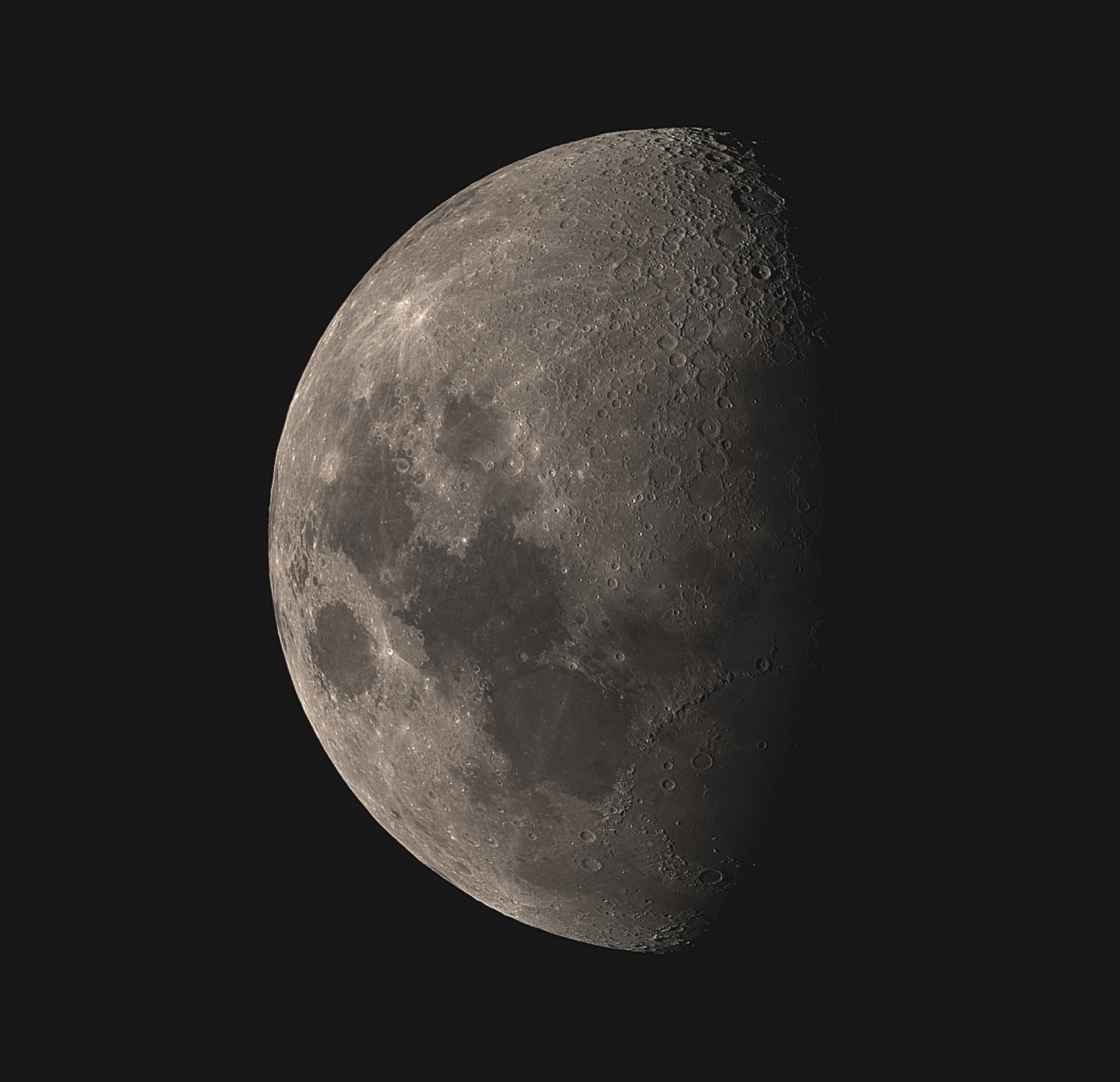
2b) the same image converted to greyscale (cheating) - 2B is probably my favourite so far.
3. 127ED APO with 0.7x FF/FR and ASI183MC pro at 0deg C - retained the RGB
Captured in 16bit colour, 100 frames; 1ms at 150 gain; AS!3.1, AP 66% frames, drizzle 1.5, align RGB; sharpen; jpg from TIF (<1MB) all in RGB colour
(note: when resizing this down I notice a green edge to some of the craters depending on bicubic sampling, as someone else mentioned this could likely be a sharpen artifact where pixel placement is critical, the green only comes out on sharpened images) - 3 looks nicer (softer) in full resolution; 2B looks cleaner in full resolution - all processed in a similar way

3B) is a cropped version of 3A) at 100% of the original
(note: the posting into Astrobin is viewing different side by side with what I have uploaded due to some processing by Astrobin; the same file looks crisper and cleaner on my monitor)
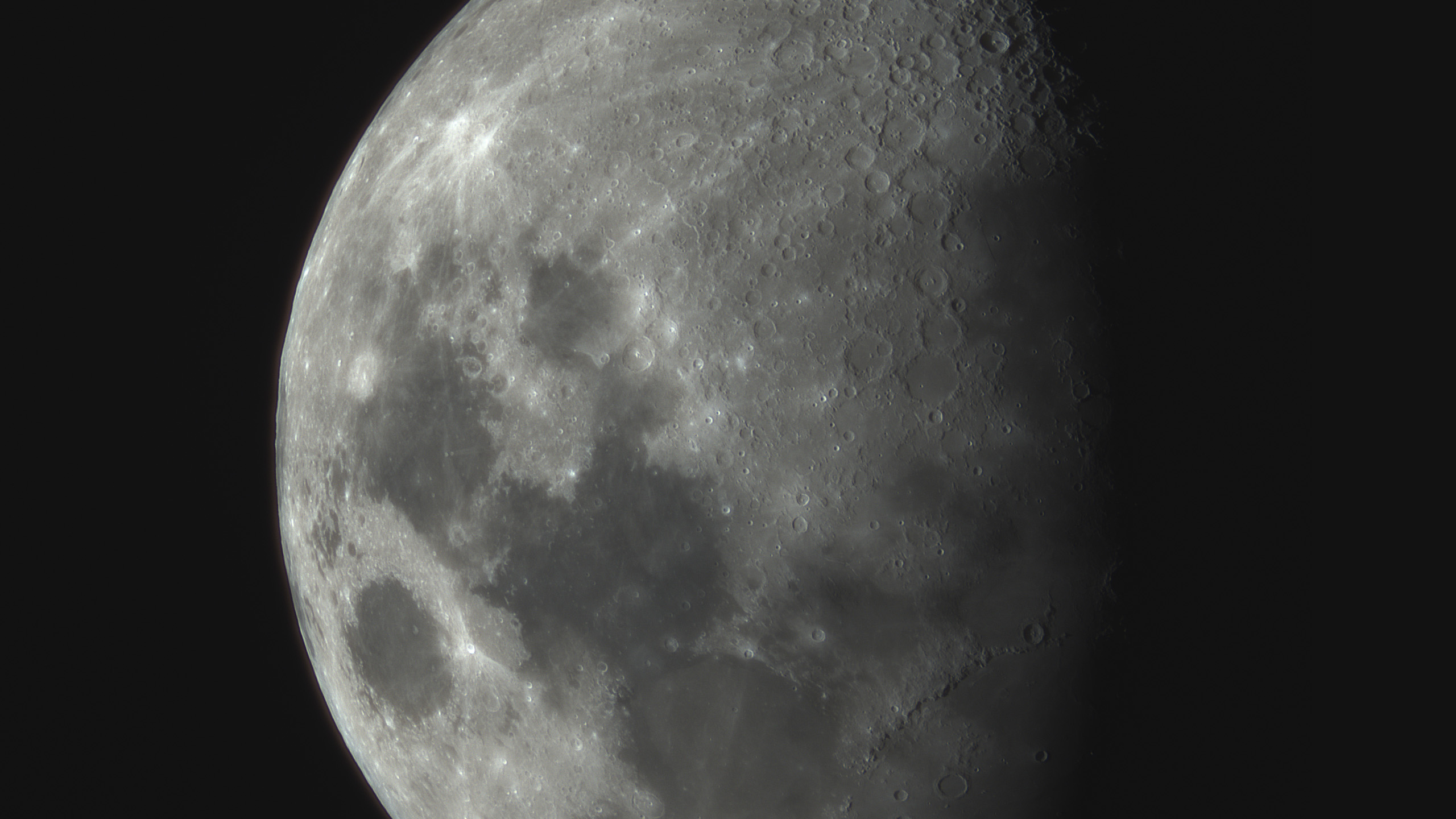
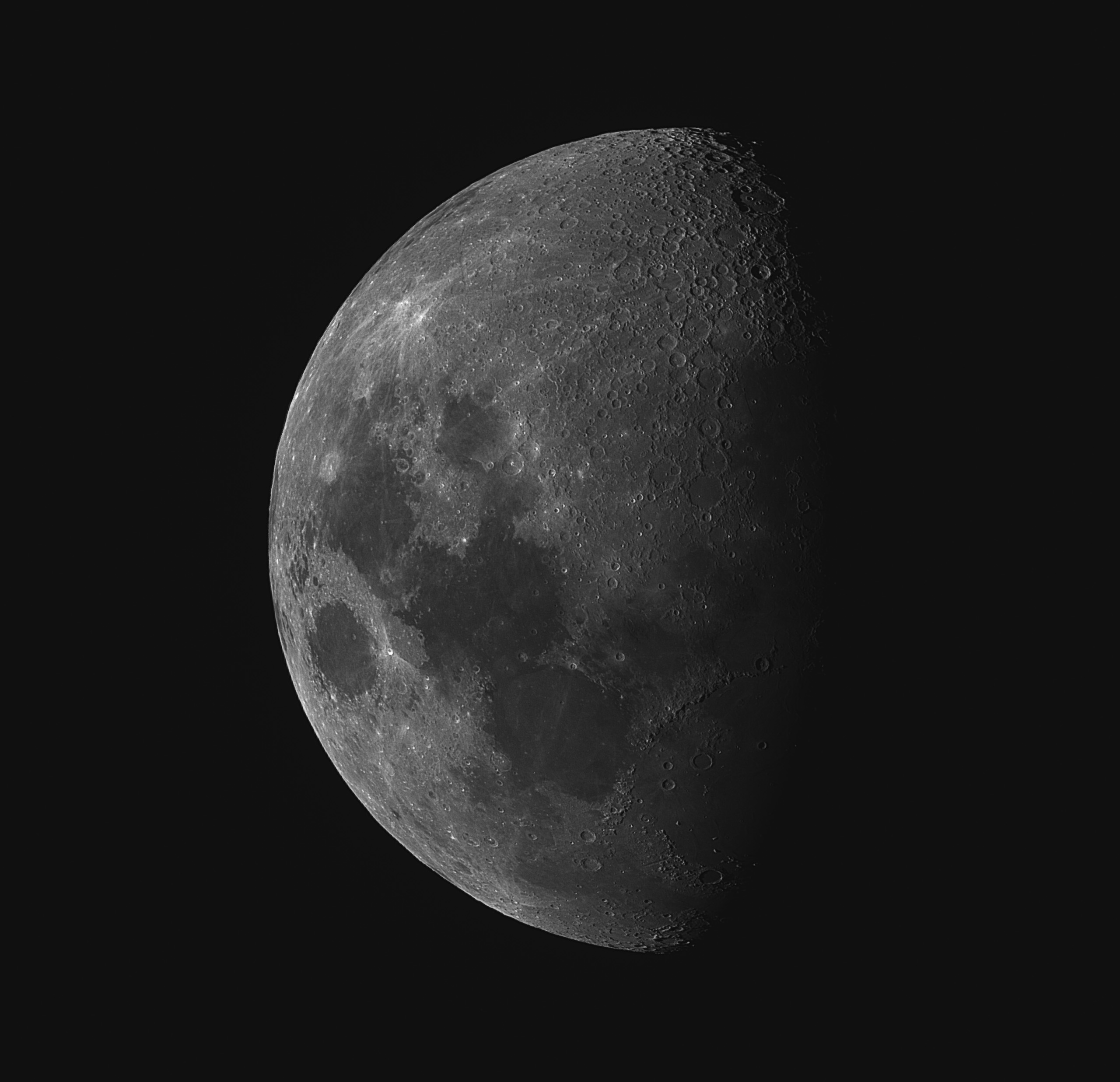
4. 127ED APO with 0.7x FF/FR and ASI462MC shot in 16bit mono
Captured in 16bit mono, 100 frames; 1ms at 150 gain; AS!3.1, AP 40% frames, drizzle 1.5, greyscale; sharpen; jpg from TIF (<1MB) all in mono
AS!3.1 upsizes the processing as this is only a 1936x1096 camera; this jpg from a bicubic resized TIF
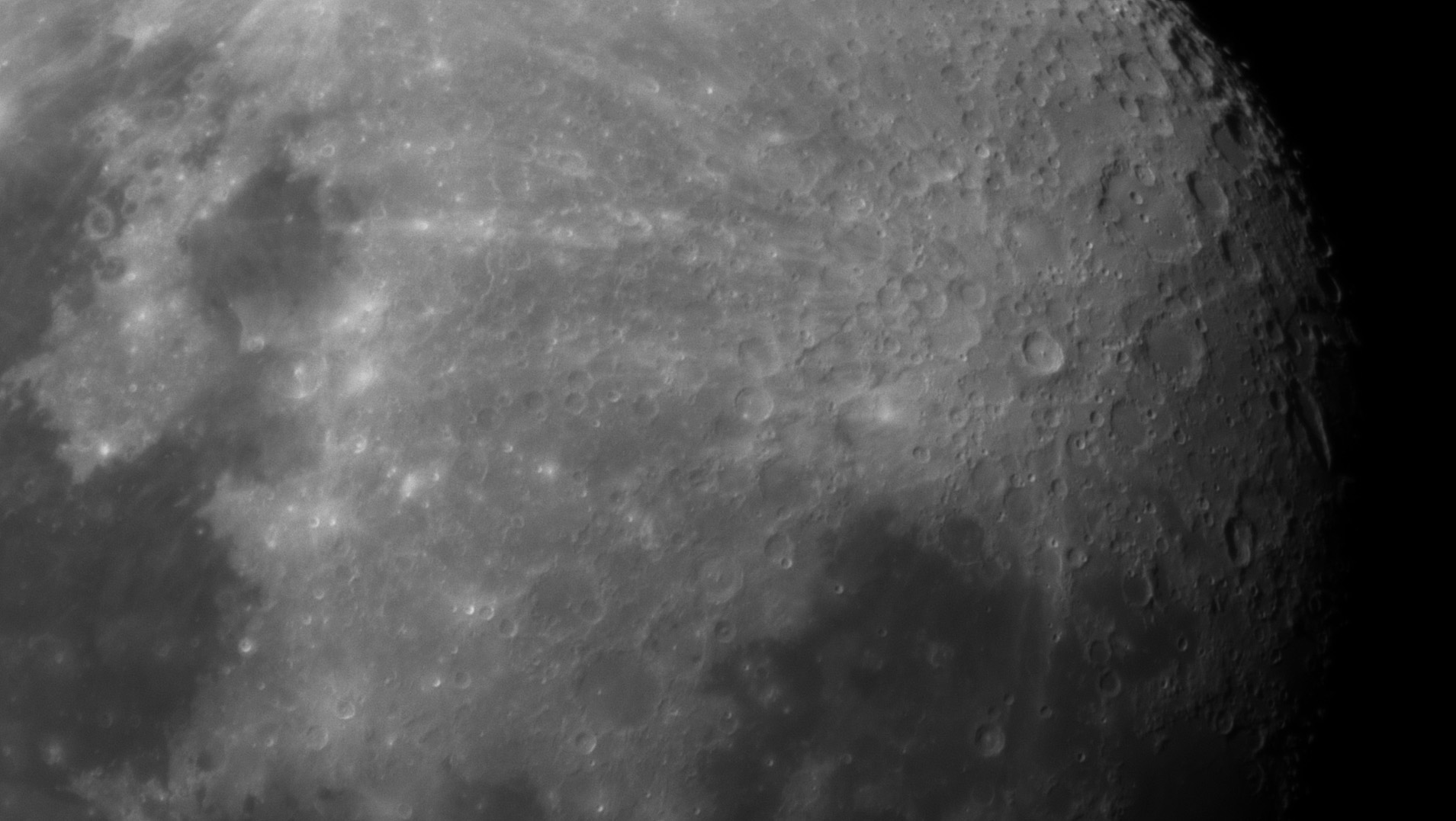
I played around with AS13.1 settings under colour (grayscale if mono vs Forced RGGB if colour)
The colour processing benefited from Image Calibration column noise and row noise; but this didn't work for mono.
(note: only single SER file lights were used in the above, no other darks, flats or calibrations were used)