Changes to PixInsight forum ????

Arun HSpaceyTony GondolaEric Gagnepfile
58 replies1.7k views
abaxworld5000 avatar

I think they are getting what they deserve. For years they have had the most complete app for deep sky astrophotography processing and that let to certain arrogance. As John Hayes has pointed out, they don’t accept discrepancies, so many times just removed comments for no reason. They don’t even solve bugs that have been around for years just because “they can’t reproduce”, but it fact is because they don’t have any interest on them ( or have terrible hardware to try ). I know Conejero personally ( years ago ) and am not a big fan of him.

So now they have something they lack for years: real competition. And their reaction is just ban everyone from making comments about how these new apps and tools ( Syril, SetiAstroSuite Pro, RC Astro, GraxPert,… ) interact with PI or are better in certain areas and ultimately close the forums with excuses and threats. May be, from the commercial perspective, it’s the right move. But they live from the users, so shouting down their mouths now that there are other options out there and free, I don’t think is very clever.

We haven’t had a new version of PI for more than a year and their are promising the v.1.9.4 for months without any real advanced, just some tools that works so so, MARS incomplete,… And in 1 year other apps that are free have advanced a lot, being better than PI in many if not in all areas. They are stuck in an old development model that doesn’t work right now, with the AI helping others to develop faster and better. This is the new reality, but they don’t want to change their business model and development workflow, so eventually they will be surpassed. May be PI is in the way to disappear ( as many other apps have in the past ) if they keep acting the way they do now.

For us users, the future is bright with so many alternatives around, so as in "Wicked”, "no one ( will ) morns the wicked witch”.

pfile avatar

John Hayes · Apr 27, 2026, 09:41 PM

pfile · Apr 27, 2026 at 09:20 PM

the mods went thru and removed what they considered to be ad hominem attacks.

In my experience, the (technically unqualified) mods on that site consider technical disagreements to be ad hominem attacks and they are on a hair trigger to remove just about anything for any reason. It is simply a terribly moderated site.

do you mean CN or PI? it might apply to both for sure… in CN’s case i guess it stems from being owned by a telescope retailer?

Arun H avatar

abaxworld5000 · Apr 29, 2026, 09:31 PM

May be PI is in the way to disappear ( as many other apps have in the past ) if they keep acting the way they do now.

Lotus 123 and WordPerfect were dominant spreadsheet and word processing applications at one point in time. CP/M was the most popular OS. Netscape was the most popular browser. Blockbuster was making a fortune on late fees. Kodak was making film by the mile. The only constant is change.

Well written
Rick Krejci avatar

Arun H · Apr 29, 2026, 09:55 PM

Netscape was the most popular browser.

I was a Mosaic fan myself…using Altavista for searches

Eric Gagne avatar

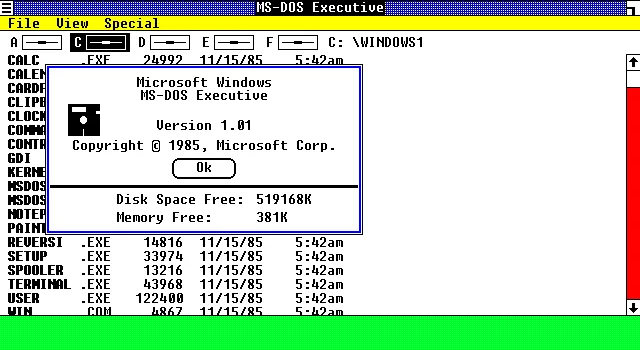
The argument could be made about Windows 1.0 too

The History of Windows: From 1.0 to 11

And yet it’s still here.

Arun H avatar

Eric Gagne · Apr 30, 2026 at 02:35 AM

And yet it’s still here.

Well, WordPerfect still exists too! But how many people still use it, or use Windows 1.0? Which of course, itself replaced MS DOS which in turn replaced CP/M!

The problem is that Juan seems to be reacting with anger and emotion and building walls to a changing financial, technical, and competitive landscape. The ground is shifting underneath him. Either he and PixInsight react to this shifting landscape by acknowledging it and making changes or they are buried beneath it.

Well written Engaging
andrea tasselli avatar

Somehow I can’t avoid thinking that the harbingers of doom and gloom for PI are overstating their cases, here and elsewhere. And as surely as the Sun rises in the East and sets in the West, Pleiades Astrophoto S.L. know more about their business than anyone here. I cannot help giving it to the man (Juan) for showing the two fingers to the rest of the (chattering) world.

Eric Gagne avatar

I think we should also all keep in mind that PI isn’t only for amateur backyard astrophotographers like us.

NASA uses it and I’m sure it’s the case for many space agencies in the world. It is not only used for processing images, it also has a lot of science applications for analysis of space data and I doubt any of those will switch to DSS and photoshop anytime soon.

Amateur astrophotographers might switch to simpler and more affordable programs, scientists and researchers won’t.

Well written Helpful Insightful Respectful Engaging
Cyril Richard avatar

Siril is also used by professional ;)

You can find it in many scientific publication.

Arun H avatar

Eric Gagne · Apr 30, 2026, 03:11 PM

NASA uses it and I’m sure it’s the case for many space agencies in the world. It is not only used for processing images,

The same could have been said for every one of the other applications I wrote about. Very similar arguments were made about CP/M, for example.

And I am more than sure, to Andrea’s point, that the CEOs and Boards of Blockbuster, Kodak, etc., felt they knew a lot about their businesses too. What I see is the following. AI is changing the way people are doing image processing. The biggest innovation we have seen has been in the Russ Croman tools - specifically BlurX and NoiseX. I no longer use the traditional PI NR and deconvolution tools. These were not developed by Juan’s team and Juan is stuck on “human” intelligence. WBPP is a huge convenience, but it is not a true differentiating factor. So the real question is - what differentiates PI from something else available? I feel that the answers are:

  • The installed base/incumbency. This is insufficient protection and particularly so given the difficulty of learning PI.

  • The availability of the Croman tools. But others can develop such tools for other platforms too.

If you read the CN threads, you’ll see people bringing up real issues with PI that are going unaddressed. Telling your customers to go pound sand is not a smart strategy IMO. Anyhow, I guess time will tell.

Well written Engaging
Wei-Hao Wang avatar

Arun H · Apr 30, 2026 at 04:51 PM

  • The availability of the Croman tools. But others can develop such tools for other platforms too.

Not only others can develop such tools, I believe even Croman himself can port his tools to other platforms if he wants. Am I wrong?

Overall, I would say PI offers a more complete set of gradient-handling tools: ABE, DBE, GC, MGC. None of them is perfect, or works the best for every situation. But thus far, it’s very rare for me to encounter a case where gradient cannot be handled by any one of them.

Helpful Engaging
Spacey avatar

Arun H · Apr 30, 2026, 04:51 PM

what differentiates PI from something else available?

A workspace that while needing polish, is frankly elegant and well thought out for the intended use once you get your head wrapped around it.

Precision tools, but these truly need better or in some cases some actual documentation.

Georg N. Nyman avatar

I use PI for about 7 years now and I am surprised about the fact, that PI did not change much at all. On one side it is good, but where is their innovation?

Wait another couple of months and you have a very attractive alternative - SetiAstroSuite Pro. I use it since its very beginnings and it is getting better and better, updates and upgrades with new apps and improvements on a weekly basis. And that system is really good now… amazing, what that team achieved!

Arun H avatar

Georg N. Nyman · May 1, 2026, 01:17 PM

On one side it is good, but where is their innovation?

Exactly. GPU acceleration and the use of AI tools are probably the most revolutionary developments and both were embraced by outside developers, not PI.

I am pretty sure WBPP could be substantially accelerated using CUDA - these are basic arithmetic operations for the most part, which GPUs are built for. But we don’t have that from PI. So I am glad the competition is nipping at their heels.

Well written Engaging
Spacey avatar

Arun H · May 1, 2026, 02:32 PM

I am pretty sure

:)

Tony Gondola avatar

Wei-Hao Wang · May 1, 2026, 02:52 AM

Arun H · Apr 30, 2026 at 04:51 PM

  • The availability of the Croman tools. But others can develop such tools for other platforms too.

Not only others can develop such tools, I believe even Croman himself can port his tools to other platforms if he wants. Am I wrong?

Overall, I would say PI offers a more complete set of gradient-handling tools: ABE, DBE, GC, MGC. None of them is perfect, or works the best for every situation. But thus far, it’s very rare for me to encounter a case where gradient cannot be handled by any one of them.

I do wonder why RC Astro is so hard locked into PI? One of my main reasons for getting PI was for access to BlurX. I would imagine that if RC made a Siril and SASPro version, nearly 100% of the community would buy it.

Well written Respectful Engaging
pfile avatar

Georg N. Nyman · May 1, 2026, 01:17 PM

I use PI for about 7 years now and I am surprised about the fact, that PI did not change much at all. On one side it is good, but where is their innovation?

i don’t know about that, a lot has changed in PI in the last 7 years. off the top of my head:

GradientCorrection

MultiscaleGradientCorrection (and the MARS project)

LocalNormalization that works (spurred on by NSG)

PSF-based measurement/frame weighting

WBPP itself plus all the enhancements to it

SPCC

MultiscaleAdaptiveStretch (possibly spurred on by VeraLux)

i realize that other packages/tools have similar functionality but you can’t claim that PI has “not changed much at all” in the last 7 years.

Tony Gondola · May 1, 2026, 03:37 PM

I do wonder why RC Astro is so hard locked into PI? One of my main reasons for getting PI was for access to BlurX. I would imagine that if RC made a Siril and SASPro version, nearly 100% of the community would buy it.

we’ll never know but we also see what happens when juan perceives that he’s been crossed. in the end juan controls things because he can revoke developer certificates whenever he wants to. he’s never done this to my knowledge, but the capability is there.

of course with Prism out there it’s not like RC is the only game in town. i think Prism works with Siril and SAS, right? and Axiom 2.1 is coming.

Arun H · May 1, 2026, 02:32 PM

I am pretty sure WBPP could be substantially accelerated using CUDA - these are basic arithmetic operations for the most part, which GPUs are built for. But we don’t have that from PI. So I am glad the competition is nipping at their heels.

the problem here is that PI is and always has been a cross-platform tool. CUDA does not exist on mac anymore, because apple went a different way with this. so juan would have to code twice, once for linux/windows and once for mac, because there still isn’t any unified API for GPU computation. this of course is not impossible, but it’s 2x the work. IIRC when juan hired roberto to work on WBPP he was also tasked with GPU acceleration but that quickly fell by the wayside given how much work there was to do on WBPP alone. so i think this is something that PI just de-prioritized due to the size of the company and their available resources.

Tony Gondola avatar

pfile · May 1, 2026, 04:06 PM

of course with Prism out there it’s not like RC is the only game in town. i think Prism works with Siril and SAS, right? and Axiom 2.1 is coming.

Not the only game but so far, IMO, no one has been able to match the results that BlurX provides. Especially when it comes to the stars, BX stars are just beautiful with no residual artifacts if used properly.

Arun H avatar

Spacey · May 1, 2026, 03:11 PM

Arun H · May 1, 2026, 02:32 PM

I am pretty sure

:)

I am assuming the smiley face is skepticism, but forgive me if not.

A lot of the computation in these image processing algorithms, and WBPP in particular, is simple arithmetic operations of the same type on large matrices. This type of work can effectively be parallelized, which is where GPUs excel. The literal design of a GPU is multiple cores (in the thousands) that can execute these operations in parallel. Once the parallelism is set up, the GPU executes it very, very quickly. If you look at what is happening in image calibration, the specific equations, you can very easily see how such an operation can benefit from parallel processing.

Years ago, for my PhD thesis on fluid dynamics, I used an iterative solver to solve a large set of differential equations that had been discretized using Chebyshev polynomials. The discretization, because it is implicit in time, reduces the problem of time stepping to the solution of a very large set of algebraic equations of the form Ax=b. Once the matrices become very large, it become far easier to solve these type of equations using iterative methods rather than factorization, and I have personally seen how these types of methods, just like image calibration, can benefit from parallelism.

Well written Helpful Insightful Respectful Engaging
Spacey avatar

From using PI it seems all the processes that could be paralleled are, but on CPU. I don’t doubt there’s a benefit to those processes if they are the type that can benefit from being run on a GPU.

Only massively parallel processes benefit on GPU. This is exactly why the neural network based tools excel on GPU over CPU.

There are many types of parallel computations that do better on CPU than GPU.

I know this because I’m an electrical engineer.

Arun H avatar

Spacey · May 1, 2026 at 04:56 PM

From using PI it seems all the processes that could be paralleled are, but on CPU. I don’t doubt there’s a benefit to those processes if they are the type that can benefit from being run on a GPU.

Only massively parallel processes benefit on GPU. This is exactly why the neural network based tools excel on GPU over CPU.

There are many types of parallel computations that do better on CPU than GPU.

I know this because I’m an electrical engineer.

Doing the same operations on hundreds of files each with thousands of rows and thousands of columns is exactly the type of operation that could benefit from parallel processing.

Well written Concise Engaging Supportive
andrea tasselli avatar

Tony Gondola · May 1, 2026, 04:12 PM

Not the only game but so far, IMO, no one has been able to match the results that BlurX provides. Especially when it comes to the stars, BX stars are just beautiful with no residual artifacts if used properly.

Codswallop. Yes, there are artefacts and residuals and a bad habit of eating stars. You just haven’t tried hard enough.

Spacey avatar

Arun H · May 1, 2026, 05:03 PM

Spacey · May 1, 2026 at 04:56 PM

From using PI it seems all the processes that could be paralleled are, but on CPU. I don’t doubt there’s a benefit to those processes if they are the type that can benefit from being run on a GPU.

Only massively parallel processes benefit on GPU. This is exactly why the neural network based tools excel on GPU over CPU.

There are many types of parallel computations that do better on CPU than GPU.

I know this because I’m an electrical engineer.

Doing the same operations on hundreds of files each with thousands of rows and thousands of columns is exactly the type of operation that could benefit from parallel processing.

No, you are confused on what massive parallelization is. It is not hundreds of files at the same time each with thousands of rows. Is is 1 file that can be split into thousands of rows and columns

pfile avatar

Spacey · May 1, 2026, 05:46 PM

No, you are confused on what massive parallelization is. It is not hundreds of files at the same time each with thousands of rows. Is is 1 file that can be split into thousands of rows and columns

incorrect, or rather, it can of course be both. what does it matter to the CPU or the GPU if the data is in one file or multiple files? it still needs to be read into memory from disk no matter how it is organized on disk.

PI already processes pixel stacks from hundreds of files at the same time in parallel. it’s just a question of moving that data to the GPU and asking it to do the math. on apple silicon machines the CPU and GPU share memory so there’s kind of nothing to do move-wise. on nvidia devices the data has to be moved from the CPU’s memory over the PCIe bus to the GPU’s memory, which is additional overhead. unless of course one can DMA the data straight into the GPU’s memory from disk - i don’t know. if the GPU can do these operations faster than the CPU then it’s worth the overhead.

Spacey avatar

We are getting into the things here where none of us are developers or systems engineers who know what we are talking about but I can tell you with certainty it does matter what you are doing with respect doing it on CPU vs GPU if performance is your goal and GPU does not win for every process.

A lot of PI’s issues as we may perceive them are due to its architecture which is the reason for why it is great. That architecture was made from the ground up and while it can be changed doing so is a major effort that doesn’t seem to be within the reach of a small company without funding to go through a large development. This is just my biased opinion.