Idle question while I’m waiting for to change targets when Orion moves behind the tree in my backyard: Does anybody actually set up identical telescope/camera imaging trains and combine the data from the two setups? Or do the tiny differences in tolerances between scopes, cameras, and even spacer tubes render this approach unviable?
Are two telescopes better than one?


Well Written Respectful Engaging

This does work as far as I know. People combine images from different telescopes in cooperative projects as well. Stacking algorithms just line up the stars, so you can combine images captured in different scopes just fine. (Disclaimer: I’ve not done this myself.)
Whether this approach is actually a good idea is debatable; simply buying a larger scope may be a better, more convenient, investment.
Well Written Concise

I have combined images from 2-3 disparate telescopes using Seti Astro’s excellent YouTube tutorial
It’s easy to do on Pixinsight and gives reasonable results.
If you mean shooting concurrently with two telescopes - that’s a more involved process. I haven’t done it myself, but NINA allows you to do this, I believe.
Cheers,
Kartik
Well Written Helpful Respectful Concise Engaging Supportive

John Tucker · Feb 22, 2026, 02:57 AM
Idle question while I’m waiting for to change targets when Orion moves behind the tree in my backyard: Does anybody actually set up identical telescope/camera imaging trains and combine the data from the two setups? Or do the tiny differences in tolerances between scopes, cameras, and even spacer tubes render this approach unviable?
I don’t John. I did entertain side-by-side with my 80mm and my 130mm for wide and narrower imaging.
Two identical imaging rigs would lead to many frustrations for the reasons you already stated.
I’ve done parallel runs from one night to the next to collect LRGB and Ha, OIII, S2.
Cuiv has his Franken Scope and ran into troubles (I had already imagined he would) with aligning them physically.
I have read where others have combined data from two telescopes, but it seems to be an exercise in futility.
But nothing ventured, nothing gained. Not for me.
Maybe some giant binoculars with cameras in the Eyepiece holders?
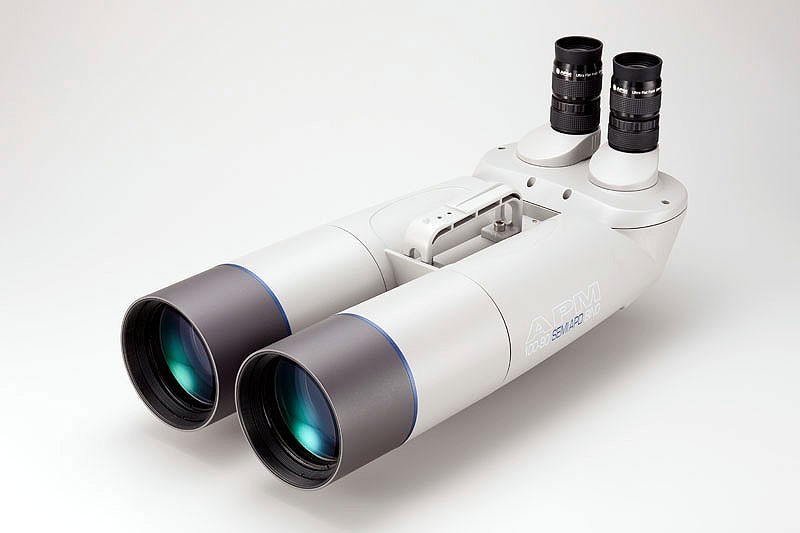
Engaging
John Tucker:
Idle question while I’m waiting for to change targets when Orion moves behind the tree in my backyard: Does anybody actually set up identical telescope/camera imaging trains and combine the data from the two setups? Or do the tiny differences in tolerances between scopes, cameras, and even spacer tubes render this approach unviable?
This is very doable. I have a local friend who used to run an FSQ 106 and AP Stowaway side by side on the same mount imaging the same target. Alignment is critical of course, but quite doable. Another ran a side by side with a TOA120 and FSQ 85 on one mount. Acquisition software like Voyager array and NINA has the capability to synchronize dithering. PixInsight has no issues calibrating and rescaling these images to a common image scale.
Well Written Helpful Respectful Concise Engaging Supportive

People certainly do it and yes, you’ll gather twice as much integration time as you would with one, that’s easy to understand. It does come with the cost of extra expense and complication.
If you look at it from the standpoint of efficiency of collection photons, well it isn’t. The light collecting area of a single 3” telescope is 22.8 square inches, going with two, 3” telescopes gives you 45.6 square inches. The light collecting area of one 6” scope is 113 square inches. By adding a second scope you’ve only gained 22.8 square inches. By doubling the aperture you gain 67 square inches. You get much more light without the high price and complication of a dual rig. If you match focal length then the lager aperture becomes even more attractive.
Some will argue that they can shoot say Ha and Oiii at the same time and that’s a convenience and it is, but as with most things in the hobby, aperture wins. Well money wins but that’s a different thread….:)
Well Written Helpful Engaging
Tony Gondola · Feb 22, 2026, 02:02 PM
People certainly do it and yes, you’ll gather twice as much integration time as you would with one, that’s easy to understand. It does come with the cost of extra expense and complication.
If you look at it from the standpoint of efficiency of collection photons, well it isn’t. The light collecting area of a single 3” telescope is 22.8 square inches, going with two, 3” telescopes gives you 45.6 square inches. The light collecting area of one 6” scope is 113 square inches. By adding a second scope you’ve only gained 22.8 square inches. By doubling the aperture you gain 67 square inches. You get much more light without the high price and complication of a dual rig. If you match focal length then the lager aperture becomes even more attractive.
Some will argue that they can shoot say Ha and Oiii at the same time and that’s a convenience and it is, but as with most things in the hobby, aperture wins. Well money wins but that’s a different thread….:)
All good points to be sure. As a practical matter, I’d say that most refractors (other than those with very short focal lengths) have focal ratios between F/5 and F/7.5. So if
Current scope: 600 mm focal length, F/6, 100mm aperture
in order to double your acquisition speed you would need (roughly)
New Scope: 600 mm focal length, F/4.2, aperture 141mm
There are 141mm aperture refractors out there, but not many of them are F/4-ish.
There is the reflector option, but not everyone wants to go there or reasonably can. I live in Florida and keeping condensation off the mirrors of my Newt without direct application of heat to the mirrors (which creates gradients) is no mean feat.
Well Written Helpful Respectful Concise Engaging Supportive
Tony Gondola:
If you look at it from the standpoint of efficiency of collection photons, well it isn’t. The light collecting area of a single 3” telescope is 22.8 square inches, going with two, 3” telescopes gives you 45.6 square inches. The light collecting area of one 6” scope is 113 square inches. By adding a second scope you’ve only gained 22.8 square inches. By doubling the aperture you gain 67 square inches. You get much more light without the high price and complication of a dual rig. If you match focal length then the lager aperture becomes even more attractive.
There is no debate that aperture wins for light gathering power. When people use these side by side setups, it is usually to make better use of scopes they already have.
Also - aperture is not the end all. Short focal length refractors generally have much wider FOV than larger aperture reflectors.
Well Written Helpful Concise Engaging
John and Arun, I certainly agree with you both. It’s like everything else in this hobby and life for that matter, the best answer usually is, it depends!
Respectful

Kartik Atre · Feb 22, 2026 at 03:53 AM
I have combined images from 2-3 disparate telescopes using Seti Astro’s excellent YouTube tutorial
It’s easy to do on Pixinsight and gives reasonable results.
If you mean shooting concurrently with two telescopes - that’s a more involved process. I haven’t done it myself, but NINA allows you to do this, I believe.
Cheers,
Kartik
Yes, that works but two telescopes provides only a modest advantage. Think about 1,140 telescopes all working together and you have Mothra! Mothra is at the extreme outer limits of the question you asked and you can read about it here: https://www.mothratelescope.org.
John
Well Written Concise Engaging

I do combine 2or 3 rigs (scope, mount, camera) routinely . I didn’t try dual setup (2 scopes on one mount). My scopes are of different aperture, different FL and I somehow manage to make some images. You can look to my gallery here and judge jourself… It is not always easy, but it is not a Nobel prize level of complication either… 😀
Helpful Concise Engaging Supportive
John Hayes · Feb 22, 2026, 03:41 PM
Kartik Atre · Feb 22, 2026 at 03:53 AM
I have combined images from 2-3 disparate telescopes using Seti Astro’s excellent YouTube tutorial
It’s easy to do on Pixinsight and gives reasonable results.
If you mean shooting concurrently with two telescopes - that’s a more involved process. I haven’t done it myself, but NINA allows you to do this, I believe.
Cheers,
Kartik
Yes, that works but two telescopes provides only a modest advantage. Think about 1,140 telescopes all working together and you have Mothra! Mothra is at the extreme outer limits of the question you asked and you can read about it here: https://www.mothratelescope.org.
John
I dunno. I’d say that a 2-fold advantage would be awfully nice to have.
Of course it’s doable. I did it from time to time. You can use two scopes to double the light collecting power, or to double the FoV.
Two AP92 and two similar cameras side-by-side, imaging simultaneously to double the collecting area:
https://app.astrobin.com/u/whwang?i=bj3lc5#gallery
Two RedCat side by side to form a two-frame mosaic to double to FoV:
https://app.astrobin.com/i/o6z7nj
(plus a third scope that has the same focal length and an equivalent FoV of two cats combined)
Well Written Helpful Respectful Concise Engaging Supportive

In such systems, the effective F-ratio is defined as F_eff = F_original / sqrt(N) where N is the number of scopes. So if you have 4x F/5 telescopes, you essentially have 1x F/2.5 telescope at the same focal length.
People often miss this relation, but it is exactly equivalent to exposing 4x more (in the example above, or in general N times more), which gives you sqrt(4)=2x SNR. So in principle, it gives you a chance to gather more signal in the same amount of time. Hence, the low F_eff.
Due to the square root relation, you get the most benefit when you add the second scope. Then the improvement starts to reduce and you slowly approach lower F_eff values.
There are scientific setups that exactly aim for this for the low-surface brightness objects, such as the one that combines 400mm F/2.8 Canon lenses: https://www.dragonflytelescope.org/
Well Written Helpful Insightful Respectful Engaging
Wei-Hao Wang · Feb 22, 2026, 05:17 PM
Of course it’s doable. I did it from time to time. You can use two scopes to double the light collecting power, or to double the FoV.
Two AP92 and two similar cameras side-by-side, imaging simultaneously to double the collecting area:
https://app.astrobin.com/u/whwang?i=bj3lc5#galleryTwo RedCat side by side to form a two-frame mosaic to double to FoV:
https://app.astrobin.com/i/o6z7nj
(plus a third scope that has the same focal length and an equivalent FoV of two cats combined)
I might have guessed that the sensitivity of the system was greater than reproducibility of manufacture. For example, different exemplars of Newtonian coma correctors of the same brand and model number can have optimal backfocus that differs by several millimeters. Not an optics guy but I could imagine this leading to very small differences in effective focal length that would raise heck with attempts to combine subs from the two scopes.
Another example is that when I swap one of my ASI1600MC Pro cameras for another, I have to refocus. There is apparently not only variable sensor tilt, but small differences in sensor depth. Of course this example is simply corrected by refocusing.
Well Written Respectful Concise Engaging
Kay Ogetay · Feb 22, 2026 at 05:20 PM
In such systems, the effective F-ratio is defined as F_eff = F_original / sqrt(N) where N is the number of scopes. So if you have 4x F/5 telescopes, you essentially have 1x F/2.5 telescope at the same focal length.
People often miss this relation, but it is exactly equivalent to exposing 4x more (in the example above, or in general N times more), which gives you sqrt(4)=2x SNR. So in principle, it gives you a chance to gather more signal in the same amount of time. Hence, the low F_eff.
Due to the square root relation, you get the most benefit when you add the second scope. Then the improvement starts to reduce and you slowly approach lower F_eff values.
There are scientific setups that exactly aim for this for the low-surface brightness objects, such as the one that combines 400mm F/2.8 Canon lenses: https://www.dragonflytelescope.org/
Kay, that’s right…for extended objects only and I discussed this in some detail my talk, “The Quest for Aperture” on TIAC using Dragon Fly as an example. BTW, Dragon Fly was the smaller precursor to Mothra, which is currently under construction at Obstech.
John
John Hayes · Feb 22, 2026, 07:29 PM
Kay Ogetay · Feb 22, 2026 at 05:20 PM
In such systems, the effective F-ratio is defined as F_eff = F_original / sqrt(N) where N is the number of scopes. So if you have 4x F/5 telescopes, you essentially have 1x F/2.5 telescope at the same focal length.
People often miss this relation, but it is exactly equivalent to exposing 4x more (in the example above, or in general N times more), which gives you sqrt(4)=2x SNR. So in principle, it gives you a chance to gather more signal in the same amount of time. Hence, the low F_eff.
Due to the square root relation, you get the most benefit when you add the second scope. Then the improvement starts to reduce and you slowly approach lower F_eff values.
There are scientific setups that exactly aim for this for the low-surface brightness objects, such as the one that combines 400mm F/2.8 Canon lenses: https://www.dragonflytelescope.org/
Kay, that’s right…for extended objects only and I discussed this in some detail my talk, “The Quest for Aperture” on TIAC using Dragon Fly as an example. BTW, Dragon Fly was the smaller precursor to Mothra, which is currently under construction at Obstech.
John
Yes! I always refer to your talk in these discussions :) I was in a rush and forgot to do it here, sorry! Thanks for the kind reminder. You provided a good qualitative proof in that talk. And for others who might not have time to listen to all, here is the summary: For extended objects, it is the F-ratio; for stars (or PSF sources in general), it is the aperture.
I often think about having such an array system, but then I do not have either the time or the resources to do it. I expect more people do it in the future, though. Bray already has 3 RASAs at SFRO, and it works like a charm.
By the way, I didn’t know about MOTHRA, thanks for sharing that! I see that it’ll be equivalent to a 4.8m aperture f/0.08 refractor. That’s amazing.
Well Written Respectful Concise Engaging Supportive

I’ve been running a dual scope rig for a bit now and getting some pretty good results. Key benefits for me have been being able to collect 2X data on a target for each clear sky night (Every clear night it precious here from my Maryland based observatory), and being able to collect narrow band/dual band data in tandem which allows me to assess how an image is coming together after just one night of collecting data with anywhere from 4-8hrs of data collected for each band/filter.
You can see some examples in my astrobin collection if you look for the shots that reference both the TEC140MM and Redcat71 refractors and the ASI274MC and ASI585MC cameras.
Well Written Helpful Respectful Concise Engaging
John Tucker · Feb 22, 2026 at 05:30 PM
I might have guessed that the sensitivity of the system was greater than reproducibility of manufacture. For example, different exemplars of Newtonian coma correctors of the same brand and model number can have optimal backfocus that differs by several millimeters. Not an optics guy but I could imagine this leading to very small differences in effective focal length that would raise heck with attempts to combine subs from the two scopes.
Another example is that when I swap one of my ASI1600MC Pro cameras for another, I have to refocus. There is apparently not only variable sensor tilt, but small differences in sensor depth. Of course this example is simply corrected by refocusing.
If a manufacture can produce the same correctors whose BFs of different copies can be several mm apart, what you really should do is to avoid that manufacture. And for whatever reason if you can’t avoid that, you still need to spend time to figure out the best BF even if you only own one such a scope, right? If you can afford doing it once, doing it twice should not be an issue at all. If the payoff of the double amount of photons cannot justify doing this BF measurement twice, then you shouldn’t even do it once, because it’s not worthwhile.
Having two scopes side by side is all about saving time. And when talking about saving time, I think one should really start from avoiding problematic manufactures.
John Tucker:Wei-Hao Wang · Feb 22, 2026, 05:17 PM
Of course it’s doable. I did it from time to time. You can use two scopes to double the light collecting power, or to double the FoV.
Two AP92 and two similar cameras side-by-side, imaging simultaneously to double the collecting area:
https://app.astrobin.com/u/whwang?i=bj3lc5#gallery
Two RedCat side by side to form a two-frame mosaic to double to FoV:
https://app.astrobin.com/i/o6z7nj
(plus a third scope that has the same focal length and an equivalent FoV of two cats combined)
I might have guessed that the sensitivity of the system was greater than reproducibility of manufacture. For example, different exemplars of Newtonian coma correctors of the same brand and model number can have optimal backfocus that differs by several millimeters. Not an optics guy but I could imagine this leading to very small differences in effective focal length that would raise heck with attempts to combine subs from the two scopes.
Another example is that when I swap one of my ASI1600MC Pro cameras for another, I have to refocus. There is apparently not only variable sensor tilt, but small differences in sensor depth. Of course this example is simply corrected by refocusing.
Small differences in focal length are really not an issue. Your stacking software should be able to combine subs with different fields of view as long as there is significant overlap. As I mentioned, a friend of mine ran two very different scopes - an FSQ106 and an AP Stowaway - very successfully. The FSQ had a narrower fov so the Stowaway subs were automatically rescaled to that FOV. I have personally combined color from a 2600MC and lum from a294 MM with no issue.
Well Written Helpful Concise Engaging Supportive
I find one telescope is enough to wrestle with, without compounding the battle…. 😉
Well Written Respectful Engaging
I know someone who can set up SIX in a night, in mobile imaging after 4+ hours of driving.
For my mobile imaging, 1 is most comfortable. However, for the sake of getting more data, I still sometimes push beyond my comfort zone and set up a second mount with two or even 3 scopes on it. Very tiring, so I usually only do it when I plan to image for two or more nights.
Well Written Concise

I’ve been doing dual side-by-side setup for a while now and it’s not at all a hassle and it does give me double the integration time. But….I have a few rules
Scopes with different apertures are fine if you are collecting color data on the shorter focal length and luminance with the larger aperture/longer focal length. Really doesn’t work well if you try to image the same filter with different aperture scopes. Narrowband for example , you really need more similar scopes since you can’t do a luminance. And exception is object with dim and diffuse Oiii compared to Ha/Sii can be split between the wider and the narrower respectively. But objects like the Veil you really don’t gain much with dual dissimilar scopes.
I have 2 high quality 130mm aperture scopes with slightly different f ratios/focal lengths (TOA-130 f7.7, AP 130 EDFS f6.5) and they work quite well together even with the same filter. They gather similar FWHM images and having one slightly wider makes it less critical to have perfect alignment. You can look at some of my latest images takes with this combo. I can gather a great amount of data in a single night. They both ride on my Mach 2 no problem.
I’ve also combined the TOA-130 luminance with the WO Ultracat 108 color and it’s worked very well. My seeing isn’t great, so the 108 on average doesn’t trail significantly enough for FWHM when used as the color channel.
I do have 2 identical full frame chroma filter setups so I wouldn’t say it saves money in general. But it’s still cheaper and more manageable than having a massive 180mm fast refractor.
Now once you start into reflectors with spikes, it gets far more complicated. It’s probably better to stick with one fast system there.
Nina does a great job managing the synchronized dithering between 2 side-by-side systems. Been doing it a while now and it works great. And PI handles combining with aplomb, although I will say if your scopes have different distortion characteristics, you need to align more carefully in PI
Bottom line is that it’s not as difficult as many make it seem. You just have to understand the limitations and manage them.
Helpful Engaging
Arun H · Feb 23, 2026 at 03:29 AM
Wei-Hao Wang · Feb 22, 2026, 05:17 PM
Of course it’s doable. I did it from time to time. You can use two scopes to double the light collecting power, or to double the FoV.
Two AP92 and two similar cameras side-by-side, imaging simultaneously to double the collecting area:
https://app.astrobin.com/u/whwang?i=bj3lc5#gallery
Two RedCat side by side to form a two-frame mosaic to double to FoV:
https://app.astrobin.com/i/o6z7nj
(plus a third scope that has the same focal length and an equivalent FoV of two cats combined)
I might have guessed that the sensitivity of the system was greater than reproducibility of manufacture. For example, different exemplars of Newtonian coma correctors of the same brand and model number can have optimal backfocus that differs by several millimeters. Not an optics guy but I could imagine this leading to very small differences in effective focal length that would raise heck with attempts to combine subs from the two scopes.
Another example is that when I swap one of my ASI1600MC Pro cameras for another, I have to refocus. There is apparently not only variable sensor tilt, but small differences in sensor depth. Of course this example is simply corrected by refocusing.
Small differences in focal length are really not an issue. Your stacking software should be able to combine subs with different fields of view as long as there is significant overlap. As I mentioned, a friend of mine ran two very different scopes - an FSQ106 and an AP Stowaway - very successfully. The FSQ had a narrower fov so the Stowaway subs were automatically rescaled to that FOV. I have personally combined color from a 2600MC and lum from a294 MM with no issue.
Arun H · Feb 23, 2026, 03:29 AM
Wei-Hao Wang · Feb 22, 2026, 05:17 PM
Of course it’s doable. I did it from time to time. You can use two scopes to double the light collecting power, or to double the FoV.
Two AP92 and two similar cameras side-by-side, imaging simultaneously to double the collecting area:
https://app.astrobin.com/u/whwang?i=bj3lc5#gallery
Two RedCat side by side to form a two-frame mosaic to double to FoV:
https://app.astrobin.com/i/o6z7nj
(plus a third scope that has the same focal length and an equivalent FoV of two cats combined)
I might have guessed that the sensitivity of the system was greater than reproducibility of manufacture. For example, different exemplars of Newtonian coma correctors of the same brand and model number can have optimal backfocus that differs by several millimeters. Not an optics guy but I could imagine this leading to very small differences in effective focal length that would raise heck with attempts to combine subs from the two scopes.
Another example is that when I swap one of my ASI1600MC Pro cameras for another, I have to refocus. There is apparently not only variable sensor tilt, but small differences in sensor depth. Of course this example is simply corrected by refocusing.
Small differences in focal length are really not an issue. Your stacking software should be able to combine subs with different fields of view as long as there is significant overlap. As I mentioned, a friend of mine ran two very different scopes - an FSQ106 and an AP Stowaway - very successfully. The FSQ had a narrower fov so the Stowaway subs were automatically rescaled to that FOV. I have personally combined color from a 2600MC and lum from a294 MM with no issue.
I guess that surprises me because I was always under the impression that these programs averaged indvidual pixels. I’m not clear how else it would work. Obviously if the focal lengths are different, there’s not a 1 to 1 correspondence of what part of the target each pixel represents.
But sure enough, I just combined a stack of mixed 365mm and 400mm exposures in APP.
Well Written Helpful Engaging Supportive
Dual-telescope rig: seeking advice and strategies
I live in an area of the world with seeing that is average on the best nights, non-existent on most. And those nights that are best tend to be extremely short summer nights at 48º north latitude. I am trying to create a rig to best utilize the few qu...
Dual-telescope rig: seeking advice and strategies