Hello and welcome. I'd like to ask everyone if anyone knows if there are any other methods to make deep-space images better without any equipment. I have seen videos that someone uses a special equipment for them, but I feel like it could be so expensive that it kills the budget. So, I'm wondering if there are any possible methods to make that kind of image better. Or it just depends on the device's processing and how long do u stack them. Does anyone know any methods for that?
Is there any method to make deep sky images better without any equipment?


What comes to mind first is more integration time. The more time on the target you have the cleaner your master stacks will be allowing for a better end product. This doesn’t require any monetary outlay just patience.
It also depends on your definition of “without new equipment”… Does this mean an assumption of not spending “anything” at all? If not and you have some type of small budget you can look to the software side of the hobby. RC-Astro’s products like BlurXterminator and NoiseXterminator work fantastic. Pixinsight is another great investment but on the pricey side if your budget is constrained. GraXpert offers a great little suite of tools that offers denoising and background removal for free. SIRIL is another free alternative to Pixinsight although not as robust feature and ability wise. These tools can dramatically alter the quality of your image either for no cost or some small cost (small in relation to the hobby).
If you have the ability traveling to a dark site would also yield better quality images. Only cost would be any transportation fees (gas / public transit). If you image at home like I do and you scope is exposed to stray lights like a street lamp you can take steps to mitigate that by making a light shield wall out of PVC and black tarp if your even slightly handy and for a very low cost. Not a huge difference but can help.
These are just some thoughts that came to mind. Hope it helps.
It also depends on your definition of “without new equipment”… Does this mean an assumption of not spending “anything” at all? If not and you have some type of small budget you can look to the software side of the hobby. RC-Astro’s products like BlurXterminator and NoiseXterminator work fantastic. Pixinsight is another great investment but on the pricey side if your budget is constrained. GraXpert offers a great little suite of tools that offers denoising and background removal for free. SIRIL is another free alternative to Pixinsight although not as robust feature and ability wise. These tools can dramatically alter the quality of your image either for no cost or some small cost (small in relation to the hobby).
If you have the ability traveling to a dark site would also yield better quality images. Only cost would be any transportation fees (gas / public transit). If you image at home like I do and you scope is exposed to stray lights like a street lamp you can take steps to mitigate that by making a light shield wall out of PVC and black tarp if your even slightly handy and for a very low cost. Not a huge difference but can help.
These are just some thoughts that came to mind. Hope it helps.
Helpful Engaging Supportive

One of the main caveats of the Seestar is the fact that it has some very distinguished field rotation as well as the low exposure lengths due to it's limited features. You may find some tips here, but I haven't read through it all myself. I assume it involves additional gear though, mainly a wedge, and polar alignment. Shouldn't be too costly if that's all it takes.
Vinny Vent:
What comes to mind first is more integration time. The more time on the target you have, the cleaner your master stacks will be, allowing for a better end product. This doesn’t require any monetary outlay just patience.
It also depends on your definition of “without new equipment”… Does this mean an assumption of not spending “anything” at all? If not, and you have some type of small budget, you can look to the software side of the hobby. RC-Astro’s products, like BlurXterminator and NoiseXterminator, work fantastic. Pixinsight is another great investment but on the pricey side if your budget is constrained. GraXpert offers a great little suite of tools that offers denoising and background removal for free. SIRIL is another free alternative to Pixinsight although not as robust feature and ability wise. These tools can dramatically alter the quality of your image either for no cost or some small cost (small in relation to the hobby).
If you have the ability traveling to a dark site would also yield better quality images. Only cost would be any transportation fees (gas / public transit). If you image at home like I do and you scope is exposed to stray lights like a street lamp you can take steps to mitigate that by making a light shield wall out of PVC and black tarp if your even slightly handy and for a very low cost. Not a huge difference but can help.
These are just some thoughts that came to mind. Hope it helps.
So it depends on on how long am i stacking the image? And what if a message pops up that says the stacking failed and discarded? Does that mean that the device can no longer stack the image?

There are two answers to your question.
1) Integrate for as long as you can and/or over multiple nights.
2) The other is work from as dark a sky as possible.
Of these, number one is the best answer for your question as number 2 might not be free.
1) Integrate for as long as you can and/or over multiple nights.
2) The other is work from as dark a sky as possible.
Of these, number one is the best answer for your question as number 2 might not be free.

- Move to a darker sky
- Integrate for as long as you can
- Master the art of taking and applying calibration frames, especially flats
- Master a dedicated astrophotography software package (or more!)
Ignoring the last two steps will easily cause damage to the hard work spent on the first two steps!

Ah! I forgot another one:
- Ask for critique, and be ready to accept it!
Helpful Concise Supportive
Szijártó Áron:Vinny Vent:
What comes to mind first is more integration time. The more time on the target you have, the cleaner your master stacks will be, allowing for a better end product. This doesn’t require any monetary outlay just patience.
It also depends on your definition of “without new equipment”… Does this mean an assumption of not spending “anything” at all? If not, and you have some type of small budget, you can look to the software side of the hobby. RC-Astro’s products, like BlurXterminator and NoiseXterminator, work fantastic. Pixinsight is another great investment but on the pricey side if your budget is constrained. GraXpert offers a great little suite of tools that offers denoising and background removal for free. SIRIL is another free alternative to Pixinsight although not as robust feature and ability wise. These tools can dramatically alter the quality of your image either for no cost or some small cost (small in relation to the hobby).
If you have the ability traveling to a dark site would also yield better quality images. Only cost would be any transportation fees (gas / public transit). If you image at home like I do and you scope is exposed to stray lights like a street lamp you can take steps to mitigate that by making a light shield wall out of PVC and black tarp if your even slightly handy and for a very low cost. Not a huge difference but can help.
These are just some thoughts that came to mind. Hope it helps.
So it depends on on how long am i stacking the image? And what if a message pops up that says the stacking failed and discarded? Does that mean that the device can no longer stack the image?
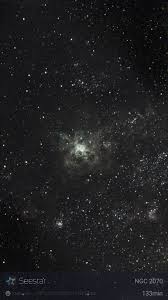
As Jan stated above you have to keep in mind field rotation. Due to the fact the SeeStar is not on an equatorial mount and is an Alt-Az go-to device you will begin to see stacking artifacts appear at the edges. See image I attached to show an example, notice how the corners are much darker.
You can tinker with times and see at what point the artifacts become to overwhelming. Let’s say after 20 minutes on a target. Make sure you have the setting to save sub frames on and move on to another target. The next clear day go out and image the same targets again. This method allows you to keep saving more and more sub frames and have more integration time. You can then use free software like SIRIL to stack and process them all together later.
Helpful Respectful
New to or Considering Astrophotography/astronomy?
I had posted this with a new image I’d uploaded as a change from the “typical” review of my processing steps/acquisition. A friend/commentor suggested I post in a forum, so this is the result. This is VERY subjective and based entirely on my experien...
Discusses astrophotography processing steps and image acquisition techniques.
Stacking tips for comet A6 Lemmon captured with 35mm lens
Hello there everybody, how are you doing? Pablo here, again. I have a couple of questions about the comet of the moment... the A6 Lemmon and I was hoping to ask for some help if possible. The only clear sky I had a few days ago was really unexpected,...
Covers stacking tips for deep-space imaging with affordable equipment.
Blurxterminator… a game changer?
In case you didn’t know this just came out: https://www.rc-astro.com/resources/BlurXTerminator/index.php im a big fan of Russells stuff… but this just takes it to a whole new level. here is a long video of Adam Block going through it… he must say the...
Yes, BlurXTerminator offers software-based image enhancement without requiring additional equipment.